

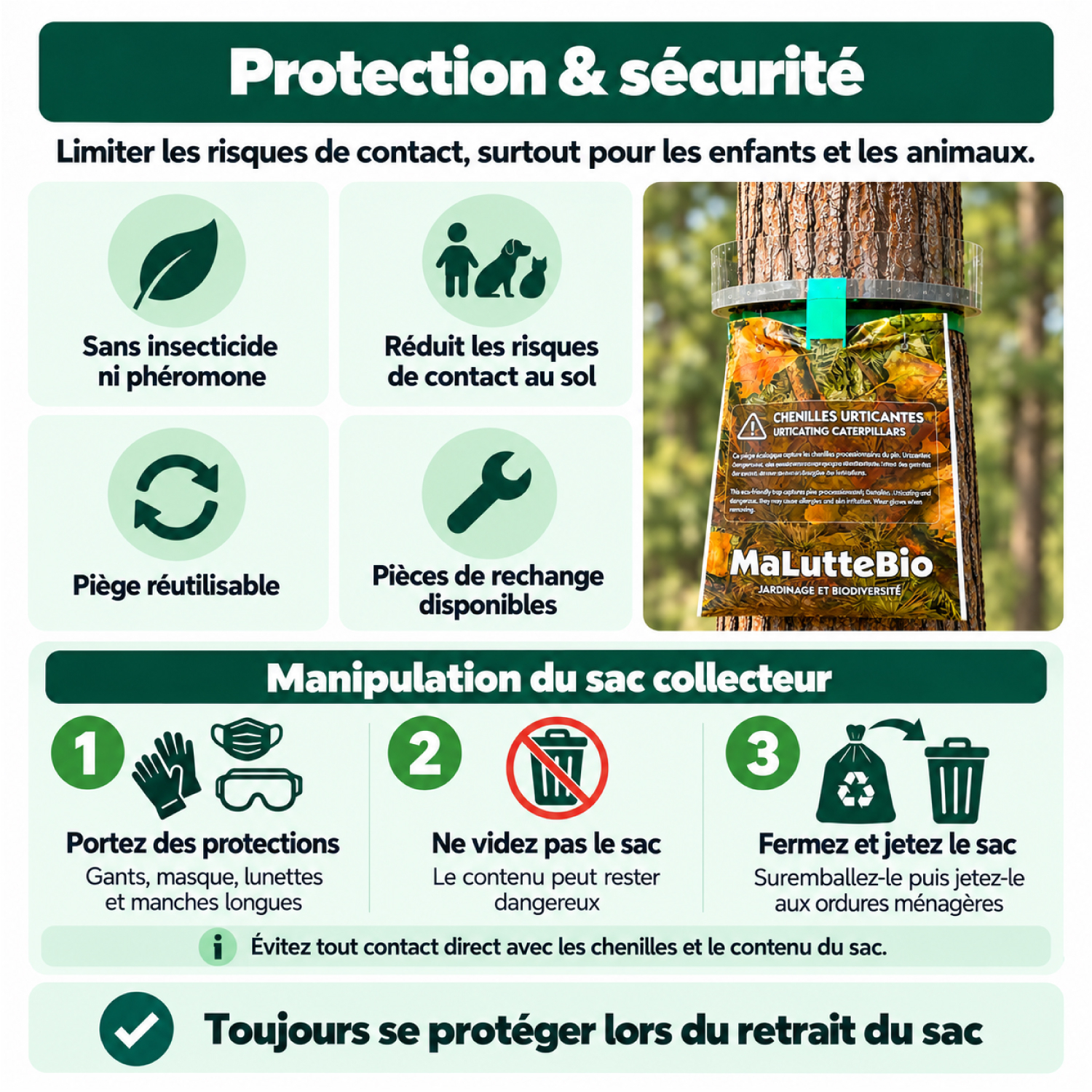
Are your pine trees threatened by the processionary caterpillar? Discover how to get rid of it effectively and without chemical products.
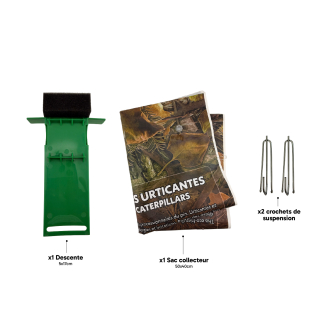
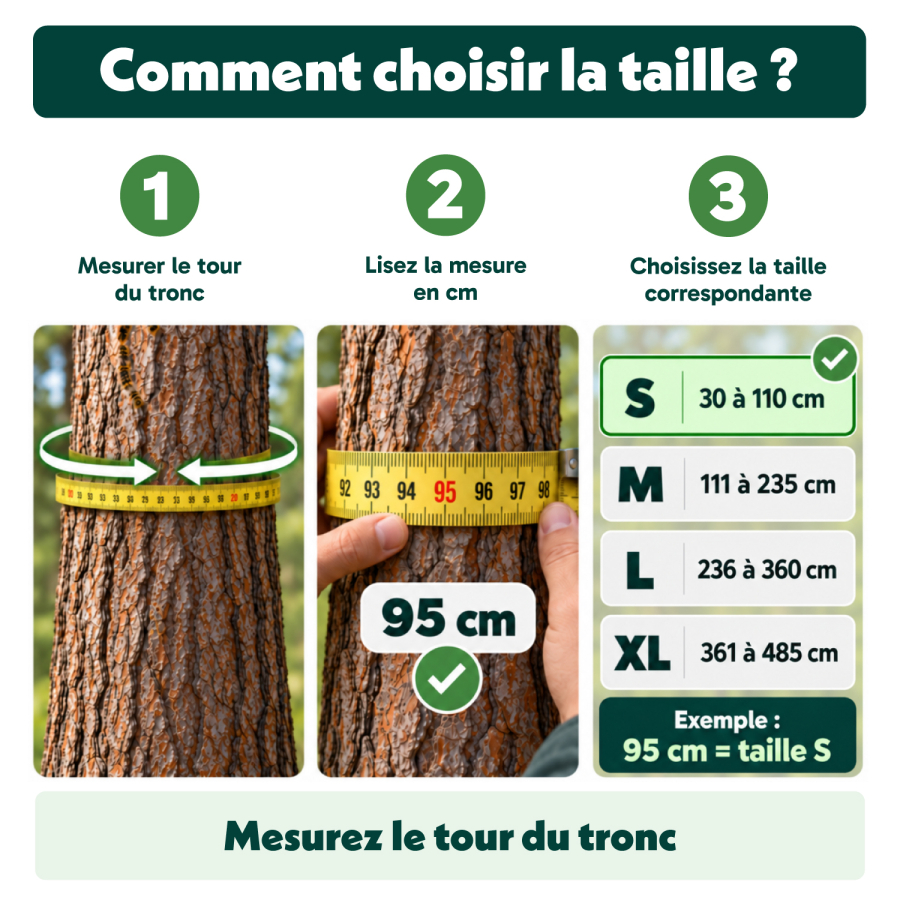
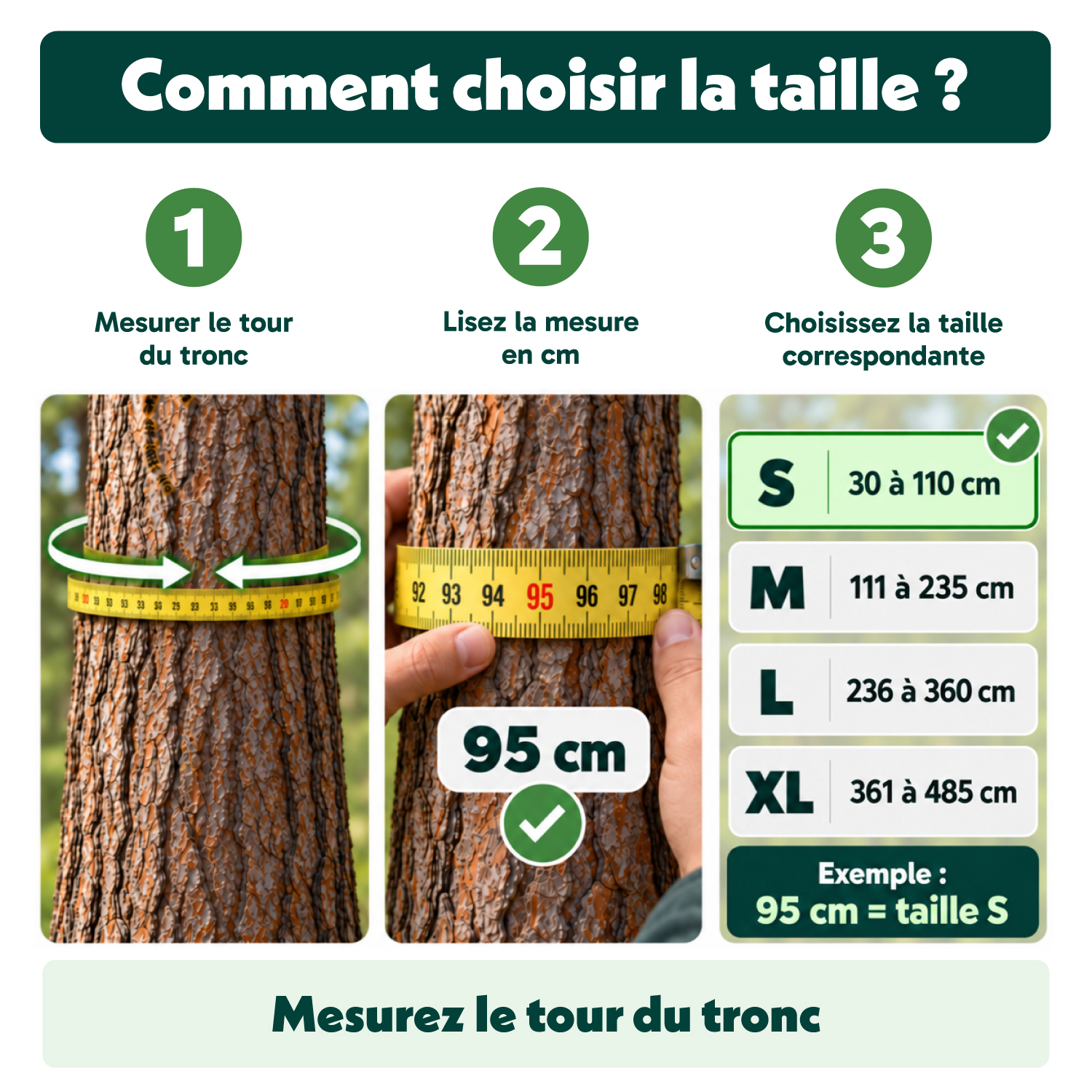
Read moreSuitable for a trunk up to 105 cm in circumference. If your trunk is larger (>105 cm), simply get a second one; you can stack as many as necessary for the size of your trunk.
The pine processionary caterpillar causes two types of damage: the first, which affects pines, causes needle loss, since processionary caterpillars feed from late winter to mid-spring on pine and cedar needles.
On the other hand, the caterpillars are highly allergenic and can cause severe allergic outbreaks in people and animals, both in mountain areas and in parks and gardens.
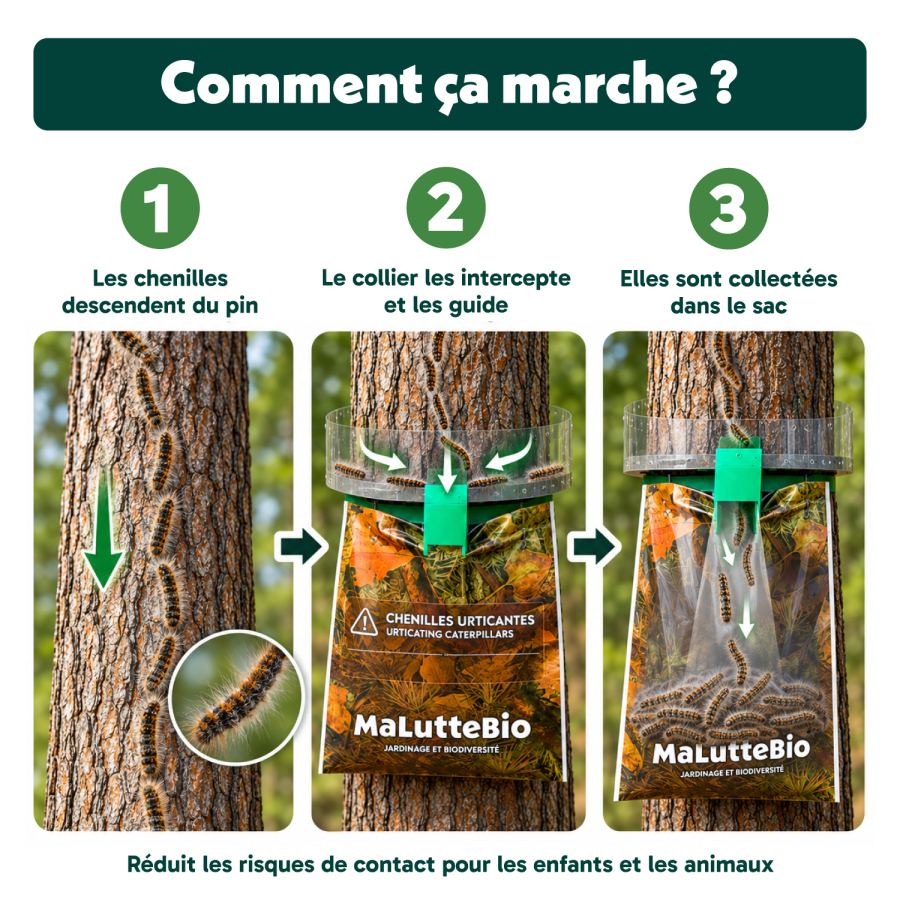
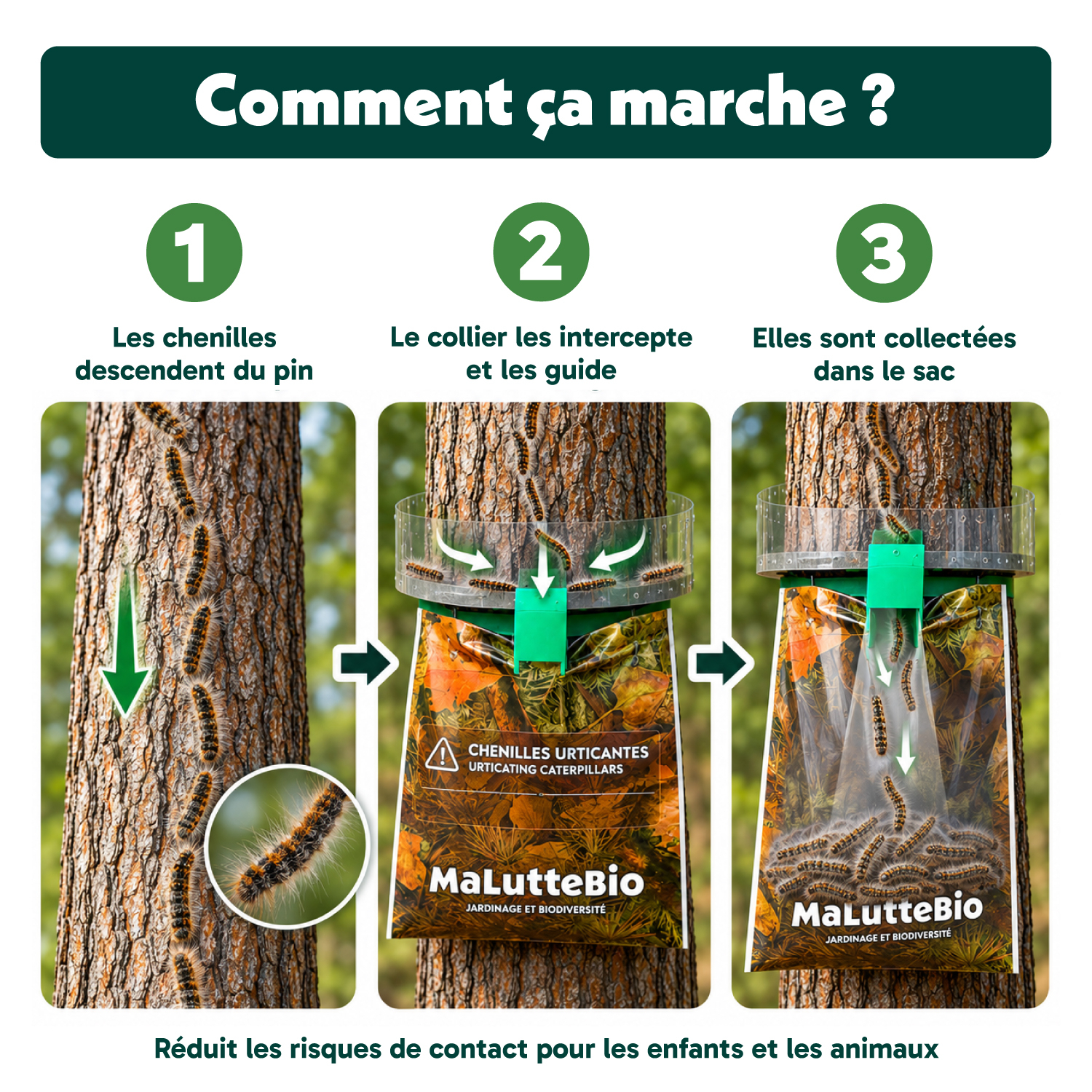
Processionary caterpillar traps take advantage of these insects’ tendency to move in single file along the tree trunk. They use attraction and capture methods to prevent them from reaching other parts of the tree or moving down to the ground to form their nests. These traps can be effective tools for locally controlling the processionary caterpillar population.
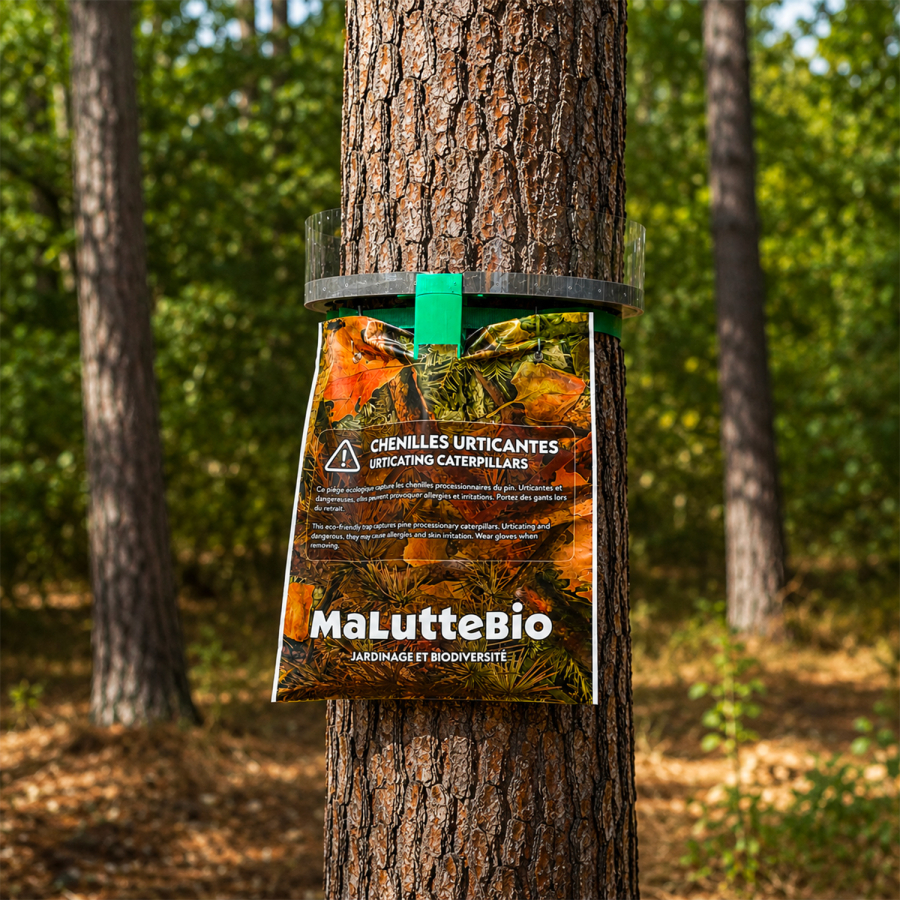
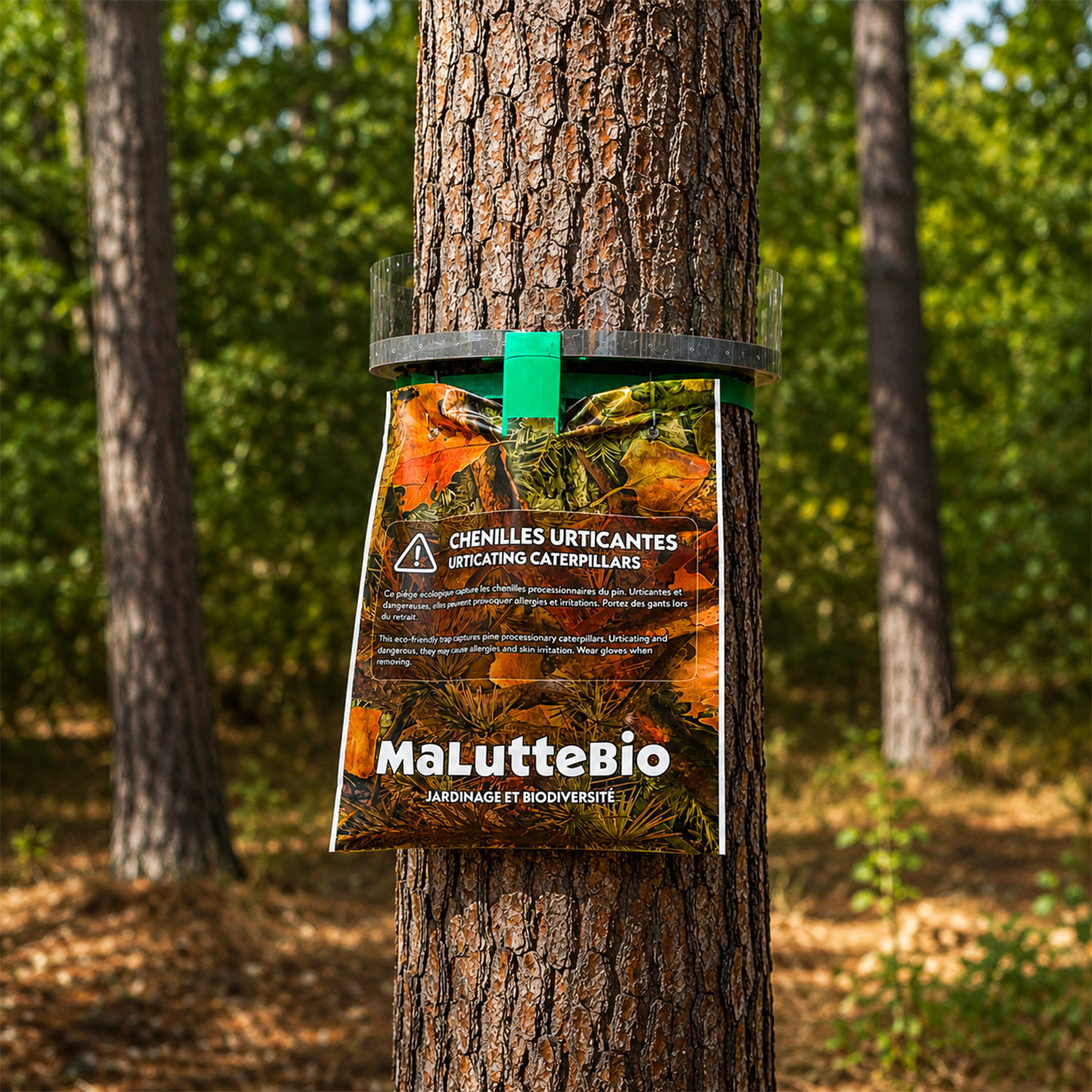
The pine processionary caterpillar trap is therefore designed to capture pine processionary caterpillars Thaumetopoea pityocampa when they descend along the trunks of trees where they have made nests (silk nests in pines). The aggregative and social behavior of this species is used to capture the entire group of larvae as they go to the ground to burrow and pupate.
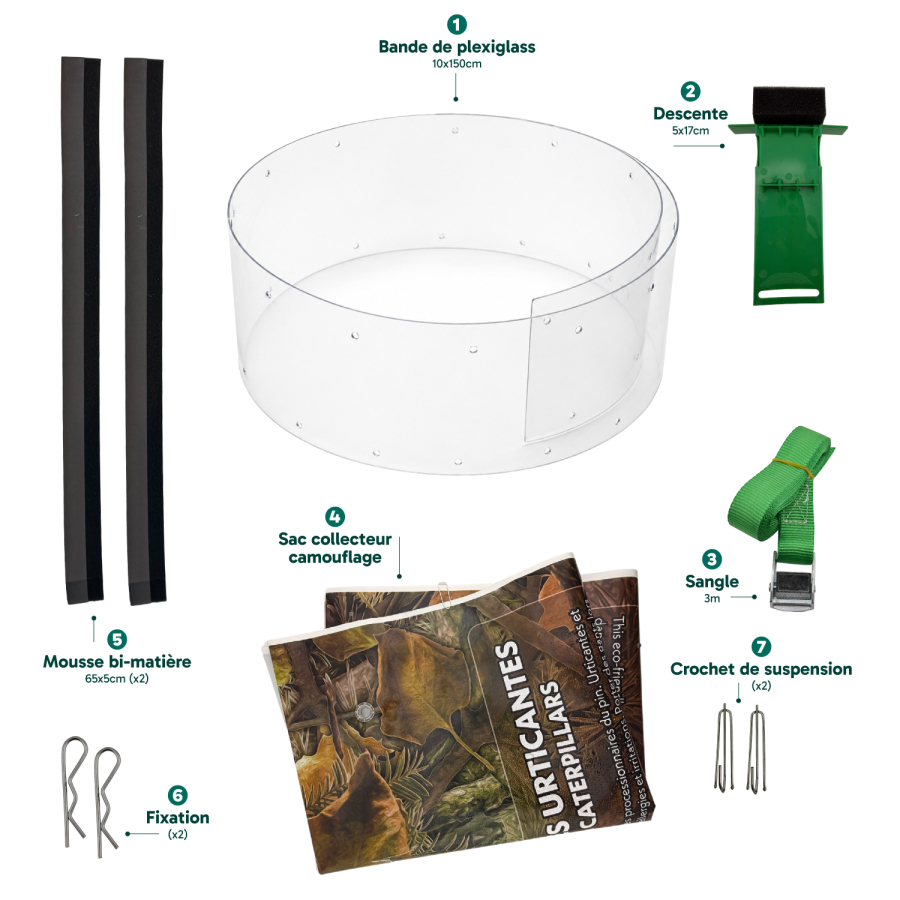
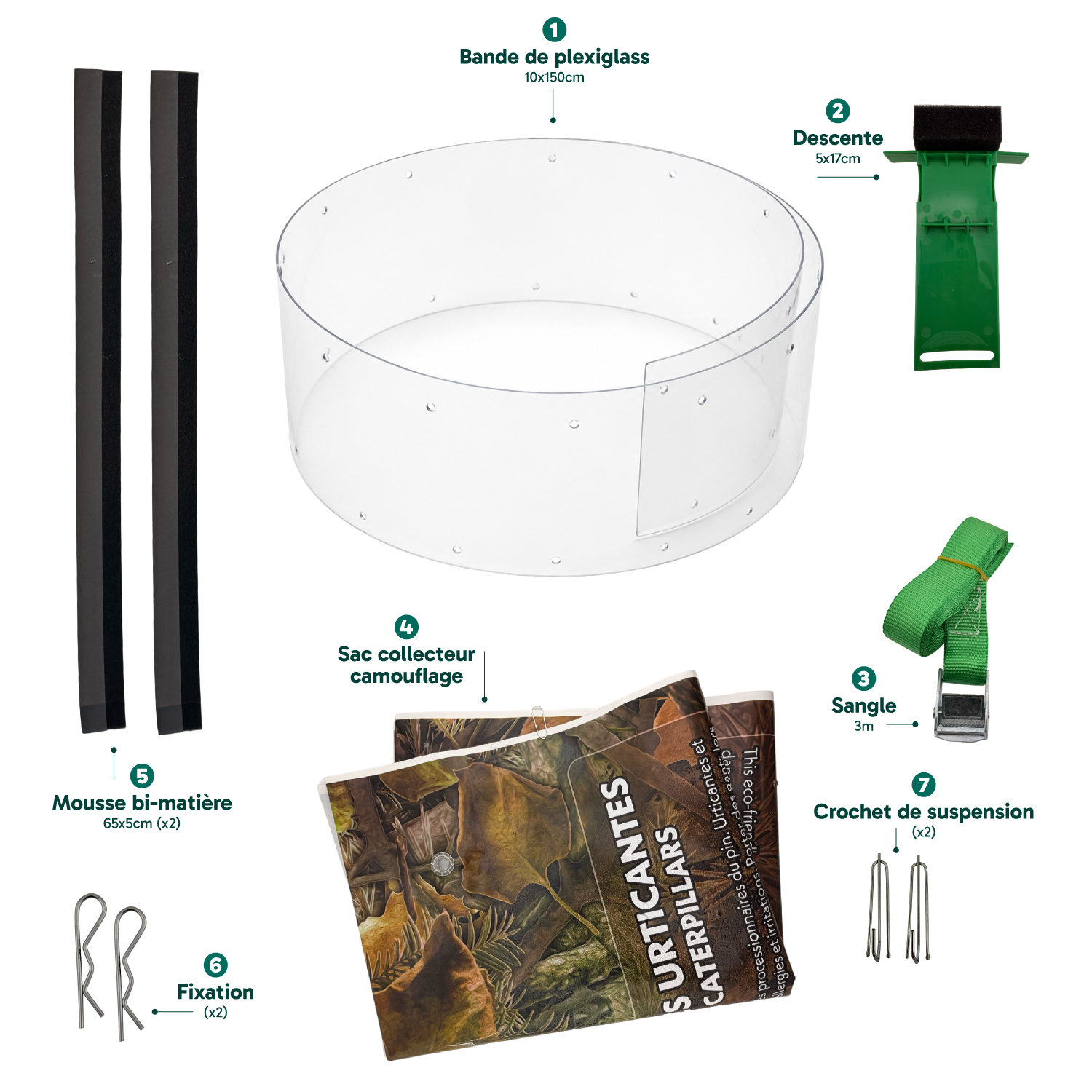
The trap consists of a black PET sheet measuring 150 x 25 cm and 0.3 mm thick, and a polyurethane foam strip with a rectangular section of 5 x 7 cm and 150 cm long, with a corrugated tube running through its middle that connects to a polyethylene bag with its lower half opaque. The black sheet is covered on the inside with a contact adhesive film (solvent-free) to facilitate assembly and discourage processionary caterpillars from climbing the sheet, forcing them to descend through the tube into the bag, where they remain trapped.
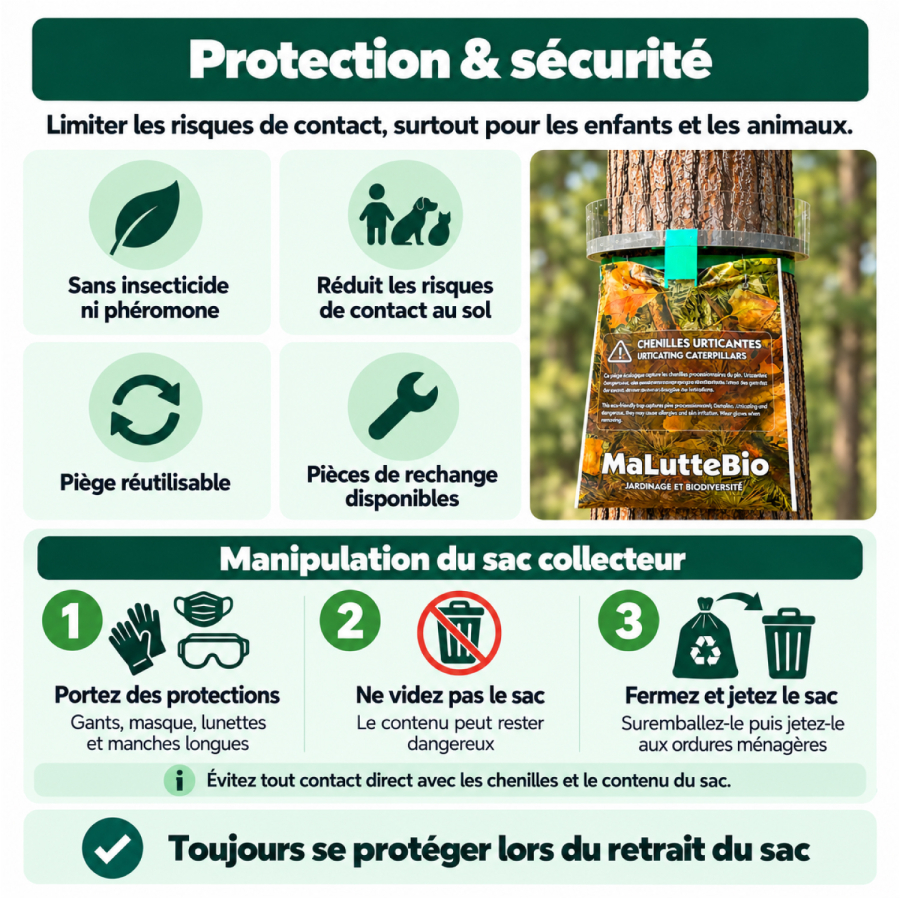
Using pheromones helps capture caterpillars by leveraging these insects’ gregarious behavior. Pheromones mimic the chemical signals emitted by the caterpillars, encouraging them to head toward the trap.
Identify trees with active processionary nests, making sure the caterpillars have not yet come down. Carefully read the instructions included in the trap box. Remove the protective paper from the sheet. Stick the foam strip to the bottom of the sheet, making sure the bag is approximately in the center. Place the whole assembly around the tree and mark the excess foam on the overlapping part. Cut only the excess foam, DO NOT CUT THE SHEET.
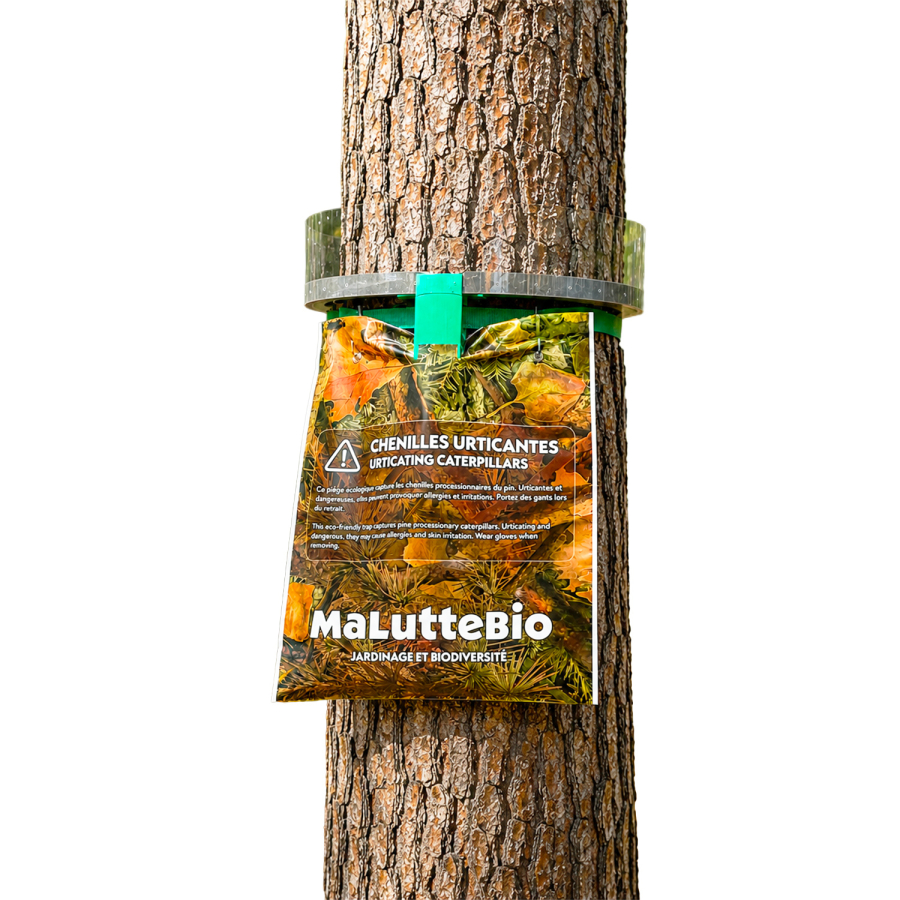
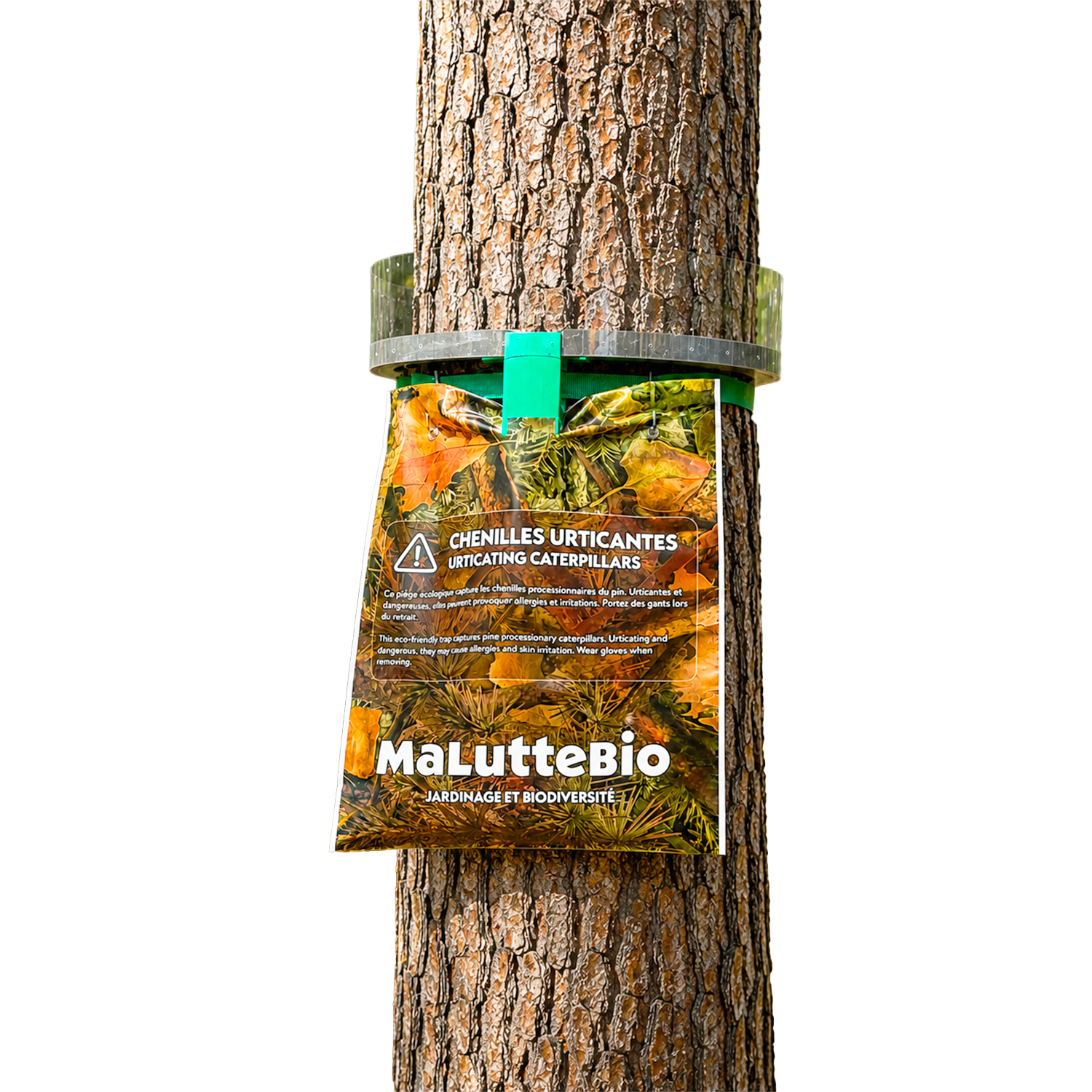
Install the trap around the trunk so that the foam completely surrounds the tree’s perimeter, with no gaps, by sticking the sheet where it overlaps. The bag should be more or less centered. Secure the overlapping part with staples at the top and bottom. Check the foam’s fit to the trunk by looking from underneath. If there are noticeable gaps, fill them with the excess foam.
Is your tree more than 105 cm?
Possible issues already encountered by our customers:

To install a pine processionary caterpillar trap, the best time is before the caterpillars come down from the trees to burrow into the soil and form their nests for the winter. That’s when they are most active and are looking to descend along the trunks to prepare for their metamorphosis phase. Installing traps at this stage can help limit their spread before they become moths and lay new eggs the following spring.
J F M A M J J A S O N DIdealPossible
The pine processionary caterpillar is attracted by different elements:
Processionary caterpillar traps exploit these behaviors by using baits or pheromones to attract these insects and trap them as they descend along the trunks or before they go down into the soil to metamorphose. These devices aim to intercept their route and limit their impact on trees and people.
More economical but more time-consuming, here are a few simple steps to make your own homemade pine processionary caterpillar trap:
Materials needed:
Making steps:
Installing the trap:
These homemade traps can be an effective solution for trapping processionary caterpillars and limiting their spread. But as mentioned, there are also ready-to-use traps available, like the one offered here.
check_circle