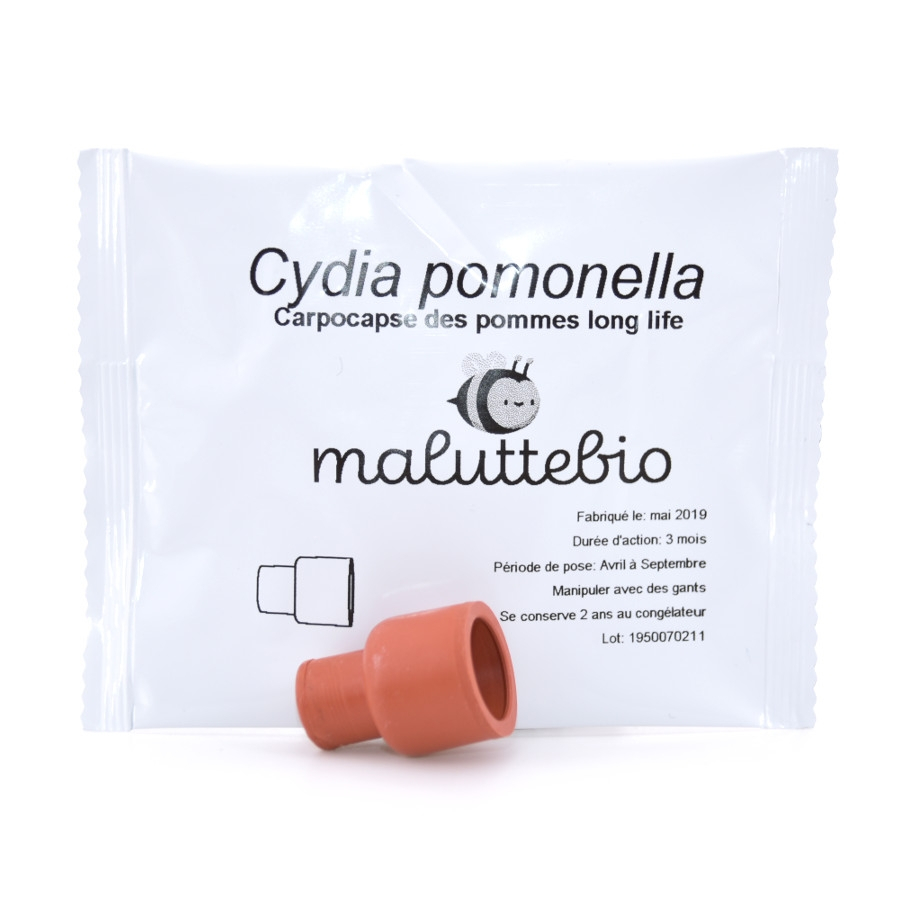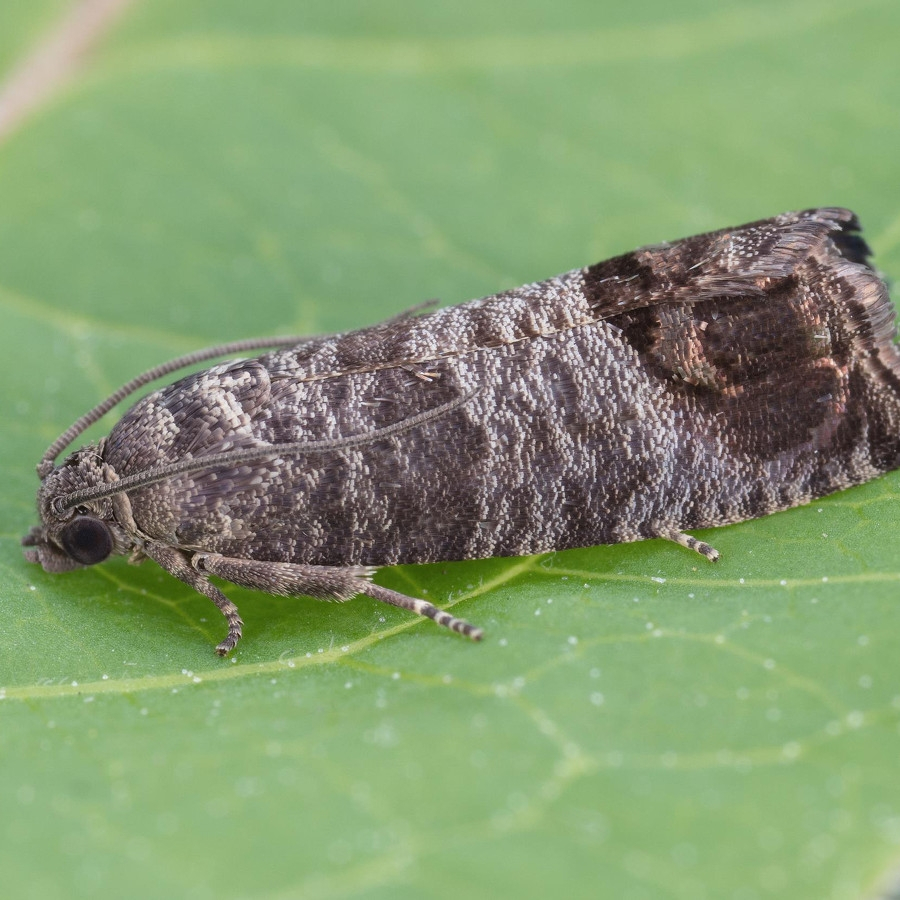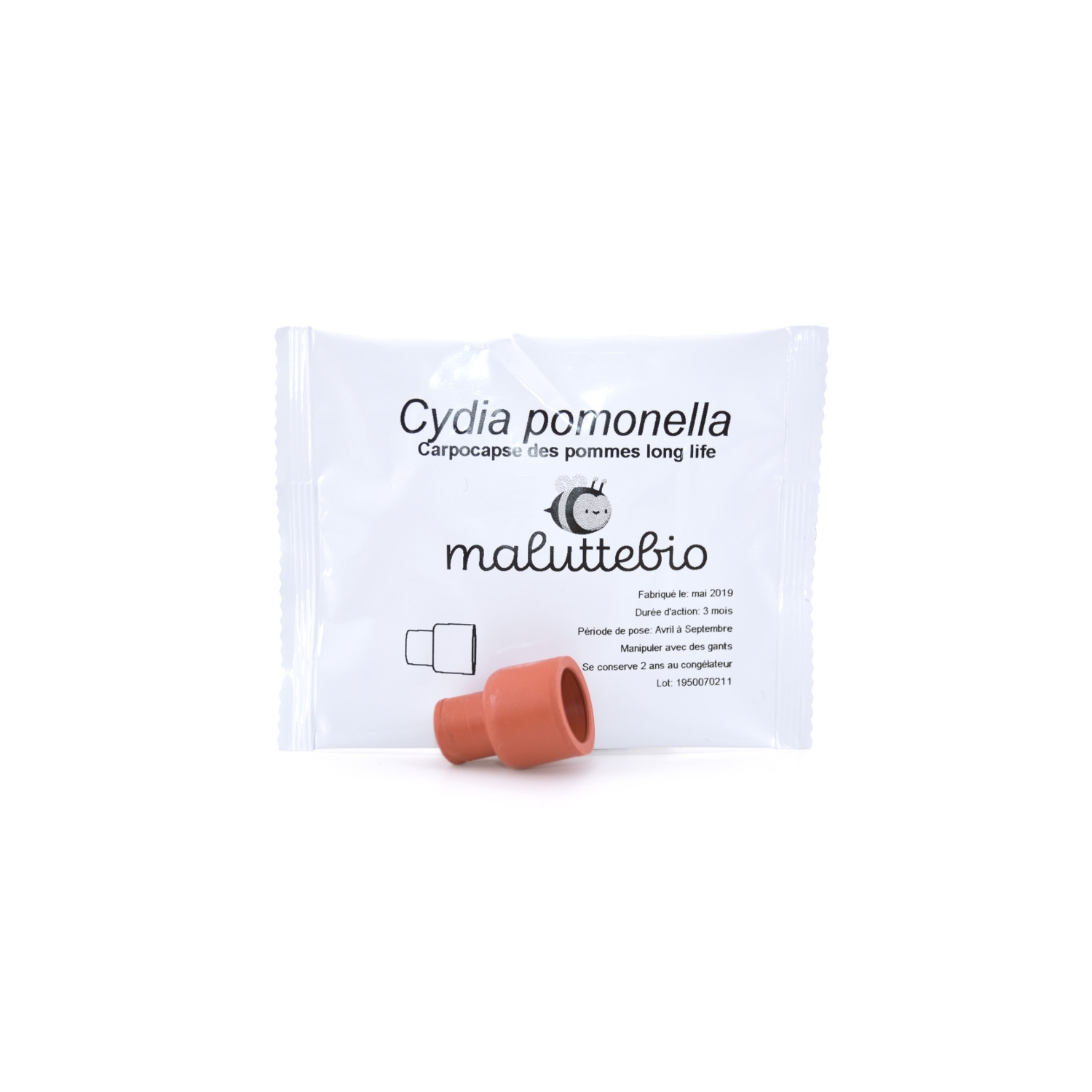
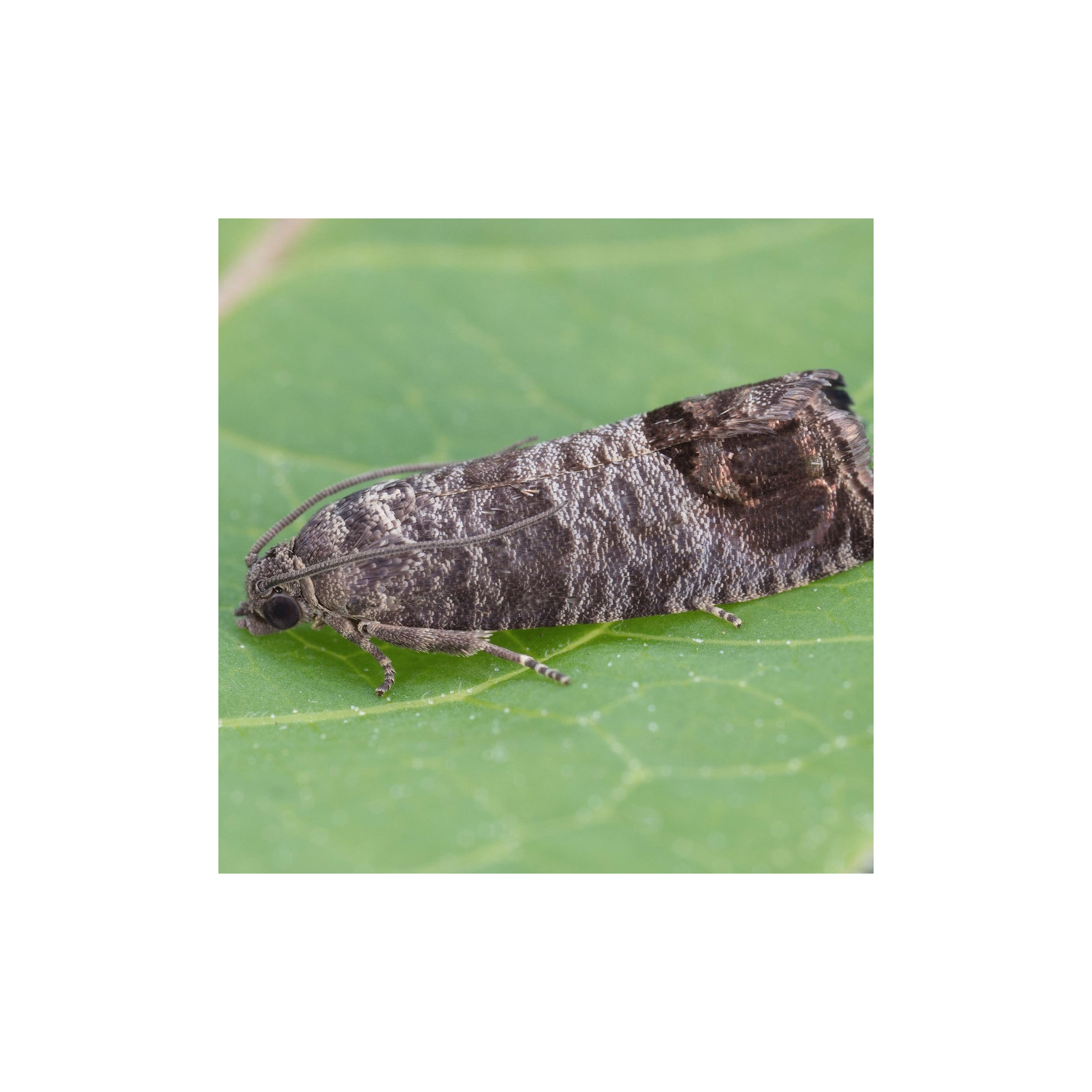
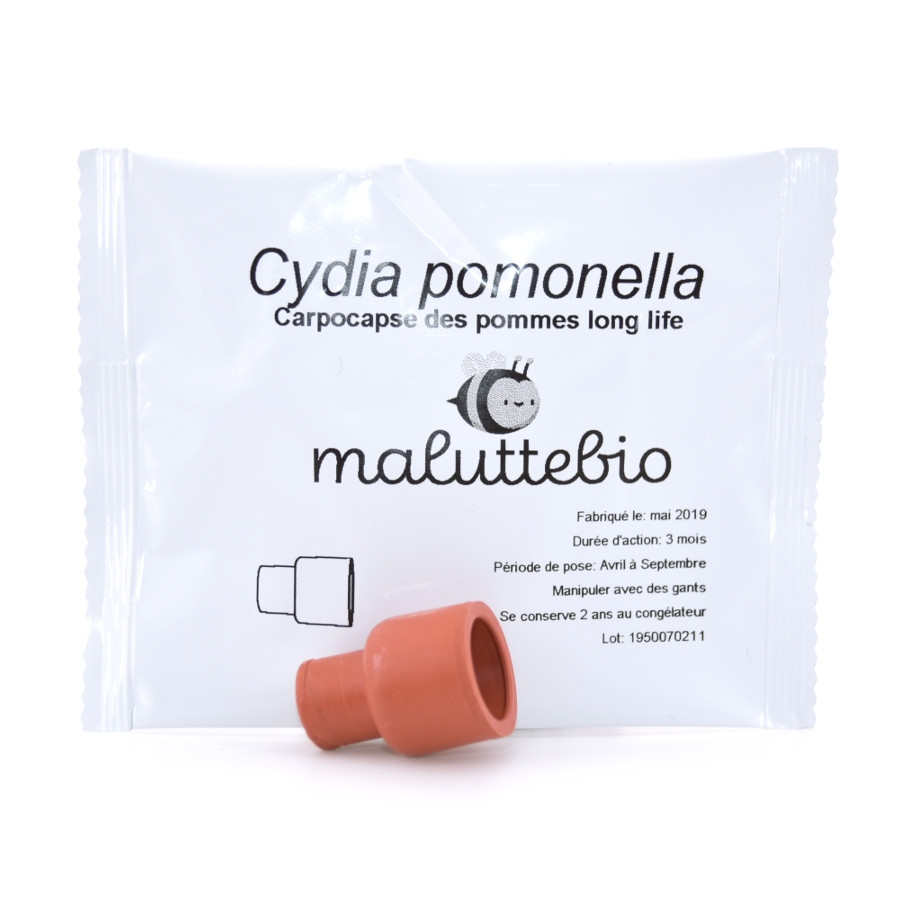
Long-Duration Codling Moth Pheromone for Apple and Pear Trees – 3 Months – Cydia pomonella

Excellent +1800 avis sur Société des AVIS GARANTIS

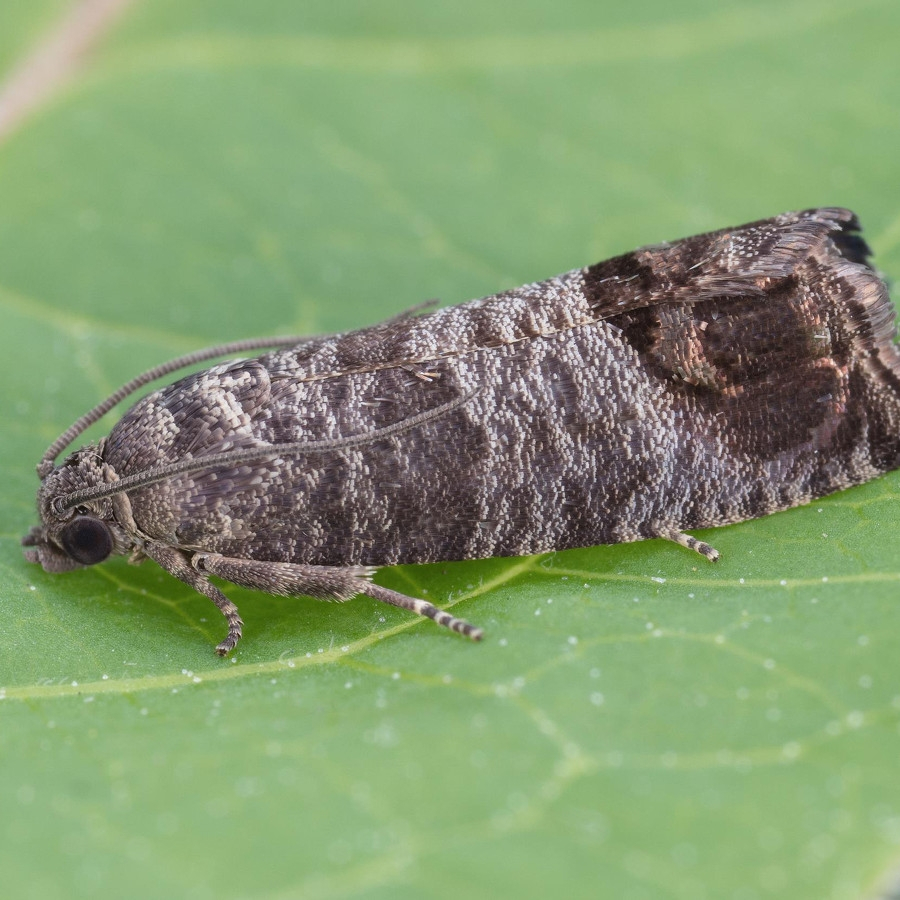
The long-duration codling moth pheromone from Maluttebio detects and captures male Cydia pomonella moths on apple and pear trees, preventing fruit from being drilled. Place it in a funnel trap starting from April; it lasts 3 months and guides biological insecticide treatments if necessary.

  • Detects codling moth flights starting from April
  • Funnel-type pheromone trap
  • Recommended biological treatment after capturing 5 individuals in 10 days
€8.09
Delivered in approx. 1 to 3 days Delivered in approx. 1 to 3 days
100% secure payment 100% secure payment

Codling moth pheromone trap for apple trees: monitoring and detecting flights

Are your apples or pears showing holes? This long-duration pheromone from Maluttebio allows you to detect male moth flights at the start of the season using a funnel trap. A natural and effective solution to anticipate attacks and protect your harvests.

The long-duration codling moth pheromone is designed to capture males and inform you of flight periods, avoiding unnecessary or late treatments. Once the trap captures 5 individuals in 10 days, a biological insecticide treatment can be applied 10 days later to target newly hatched larvae.

When to use this pheromone trap?

  • Holes or perforations in fruits on apple and pear trees
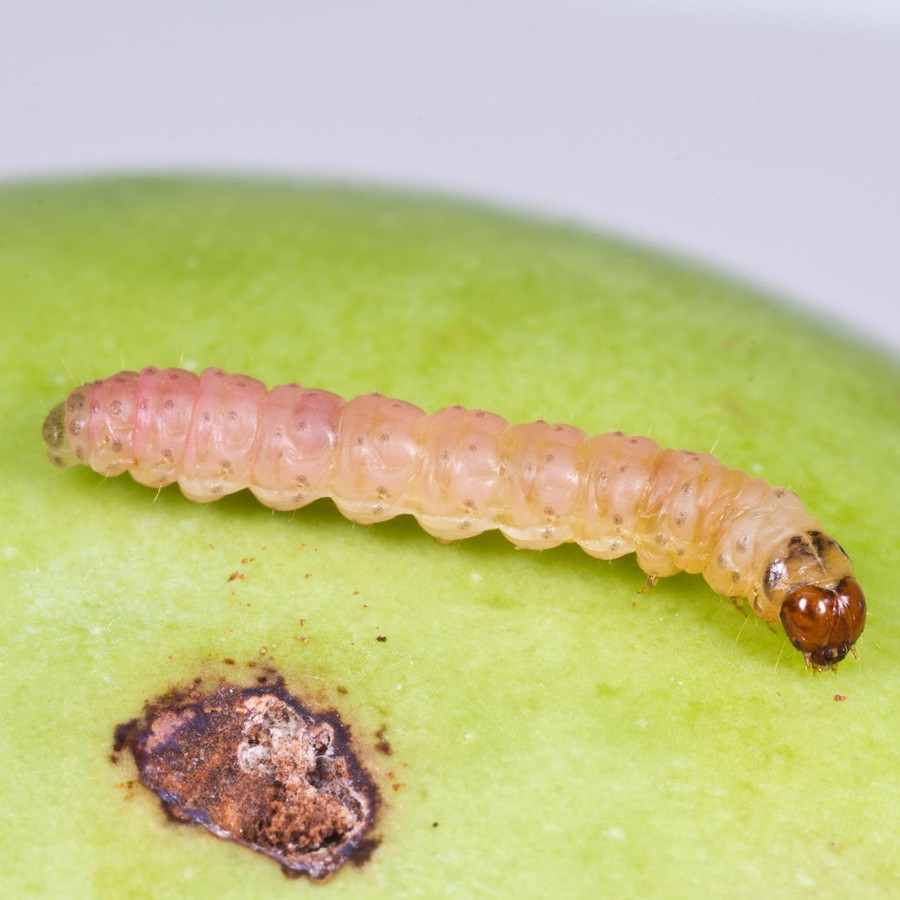
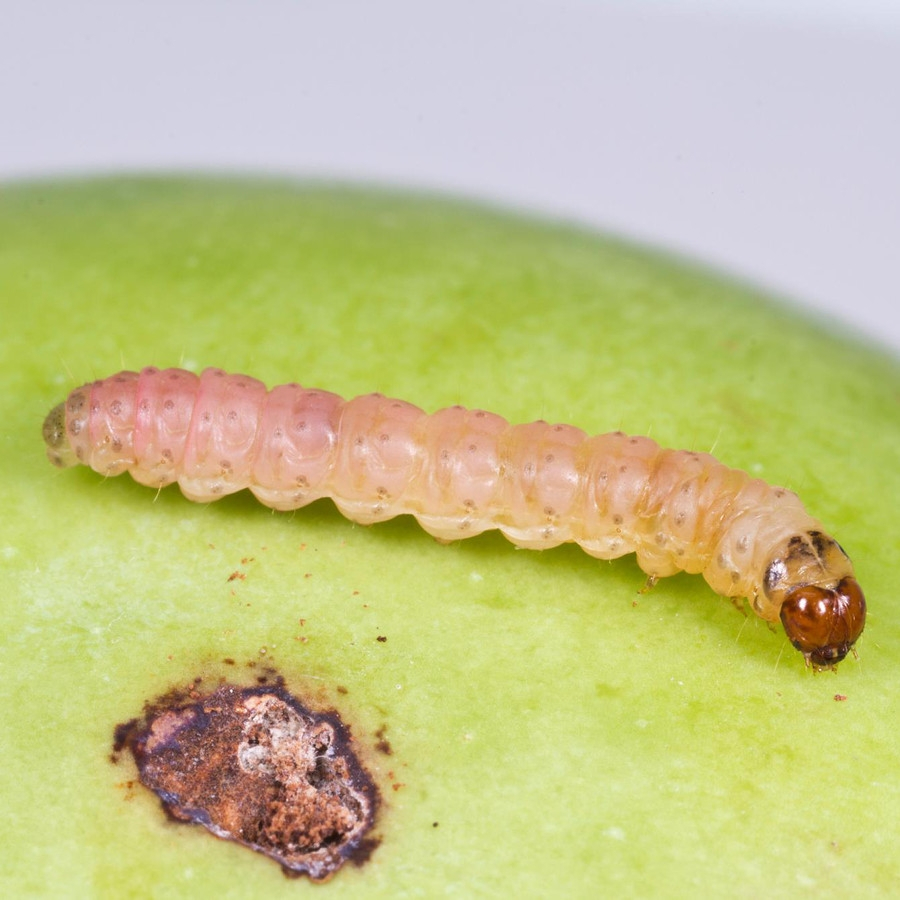
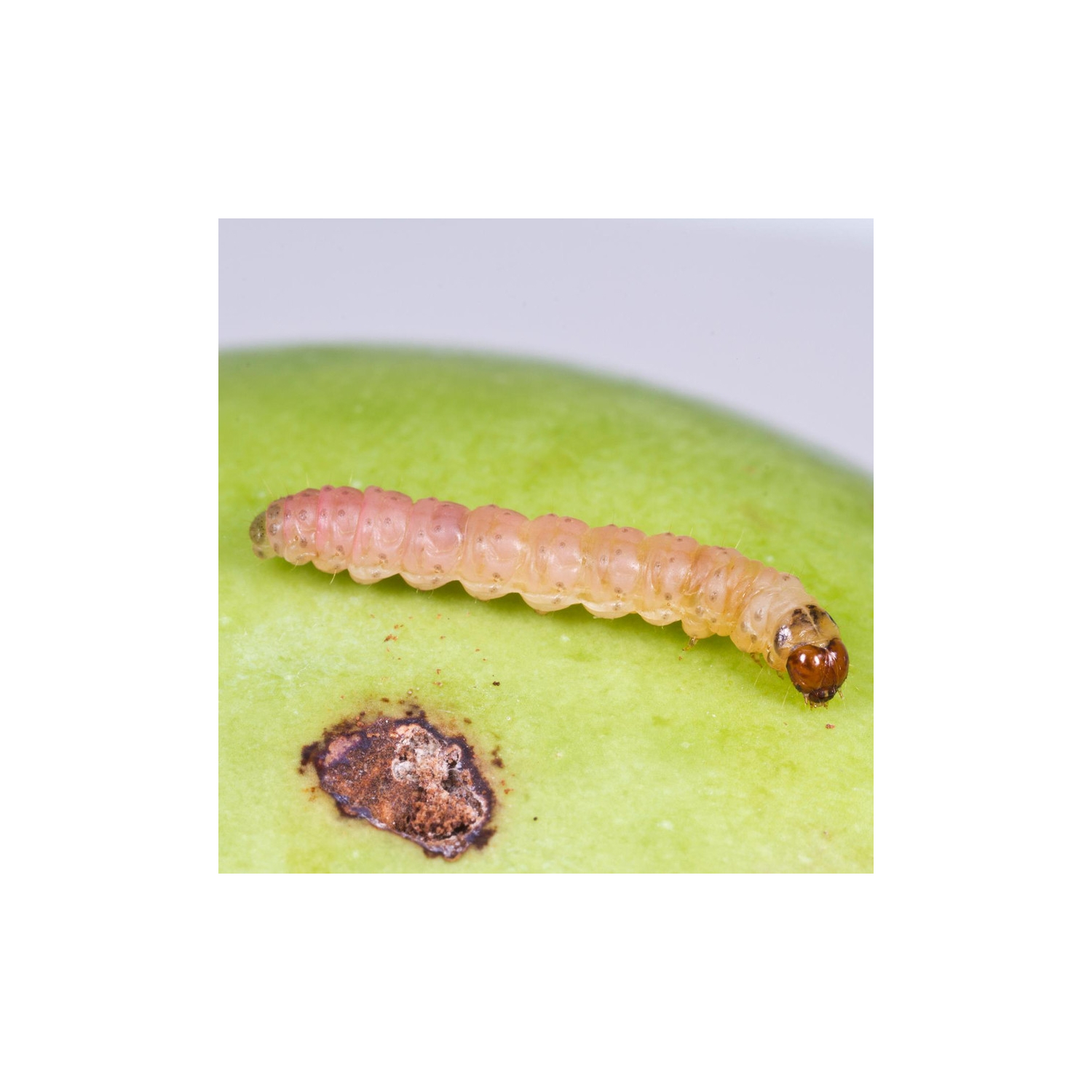
  • Presence of larvae inside the fruits
  • Early detection of male moth flights starting from April
  • Need for a monitoring tool to act at the right time

Biology and life cycle

The resulting larvae quickly penetrate the fruits to feed, repeating this cycle 2 to 3 times per year.

Male moth flights generally begin around late April, making early monitoring essential to prevent damage to the harvest.

Mode of action and use of the codling moth pheromone

The long-duration codling moth pheromone emits a chemical substance mimicking the natural pheromones of females, attracting males to the trap. This allows you to detect flight periods and intervene at the optimal time to protect your trees.

Once the trap captures 5 individuals in 10 days, it is recommended to apply a biological insecticide treatment such as Solabiol approximately 10 days later, when the larvae begin to hatch. This targeted approach minimizes the use of chemical products.

How to use the long-duration codling moth pheromone?

1

Place the pheromone capsule in an appropriate funnel trap, using gloves to avoid contamination by human odors.

2

Replace the pheromone capsule every 3 months or as soon as you observe a decrease in captures.

3

Store unused capsules in the refrigerator in their original packaging to preserve their effectiveness.

4

Ensure the trap is placed at a height of 1.5 to 2 meters from the ground for optimal detection of moth flights.

Recommended monitoring period for codling moth flights

Jan
Feb
Mar
Apr
May
Jun
Jul
Aug
Sep
Oct
Nov
Dec
Optimal use
Possible use

Avis clients

0,0/5
Basé sur 0 avis

The long-duration codling moth pheromone has an effectiveness duration of 3 months. It is recommended to replace it after this period, even if it still appears active, to maintain the attractiveness of the trap throughout the season.

For a single tree in the garden, one trap per apple tree is sufficient. This density allows detection of flights even in the presence of low insect densities.

No, the pheromone trap is a monitoring and decision-making tool. It captures males and informs you of flight periods, but it does not eliminate the entire population. In case of high pressure (5 captures or more in 10 days), it is recommended to complement with a biological insecticide like Solabiol or an anti-codling moth protection net for optimal protection.

Yes, the density of placement and usage methods remain identical for orchards or isolated trees. Early monitoring allows effective action on both apple and pear crops.

If your trap captures 5 codling moths or more in 10 days, this indicates significant pest pressure. It is then recommended to apply a biological insecticide treatment like Solabiol approximately 10 days after capture, when the larvae begin to hatch. This targeted approach limits unnecessary treatments and protects your harvests.

Loading...