Larvae of Hippodamia undecimnotata ladybugs for aphid control on roses and oleanders

Excellent +1800 avis sur Société des AVIS GARANTIS

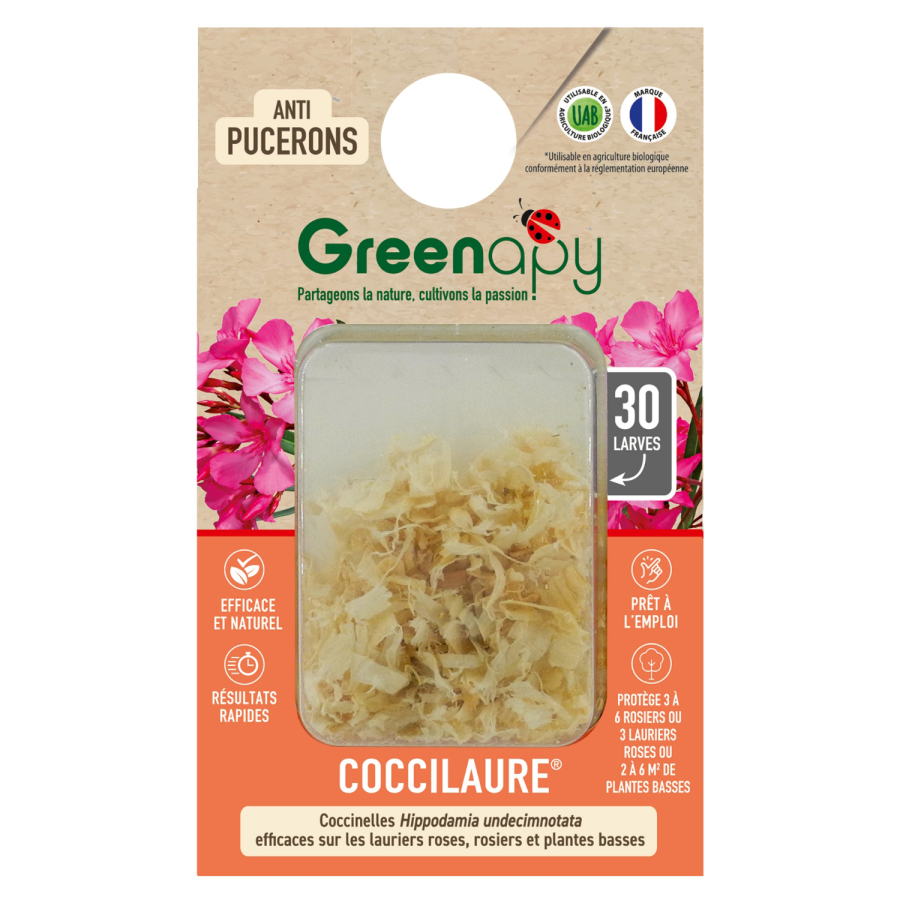
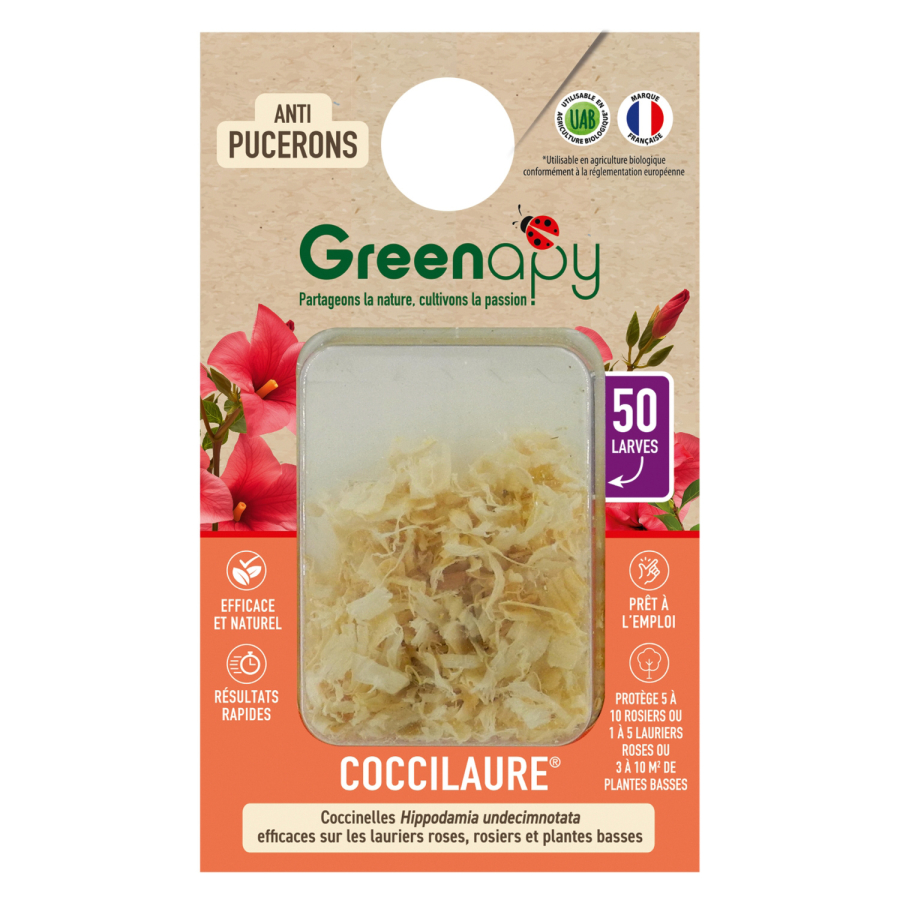
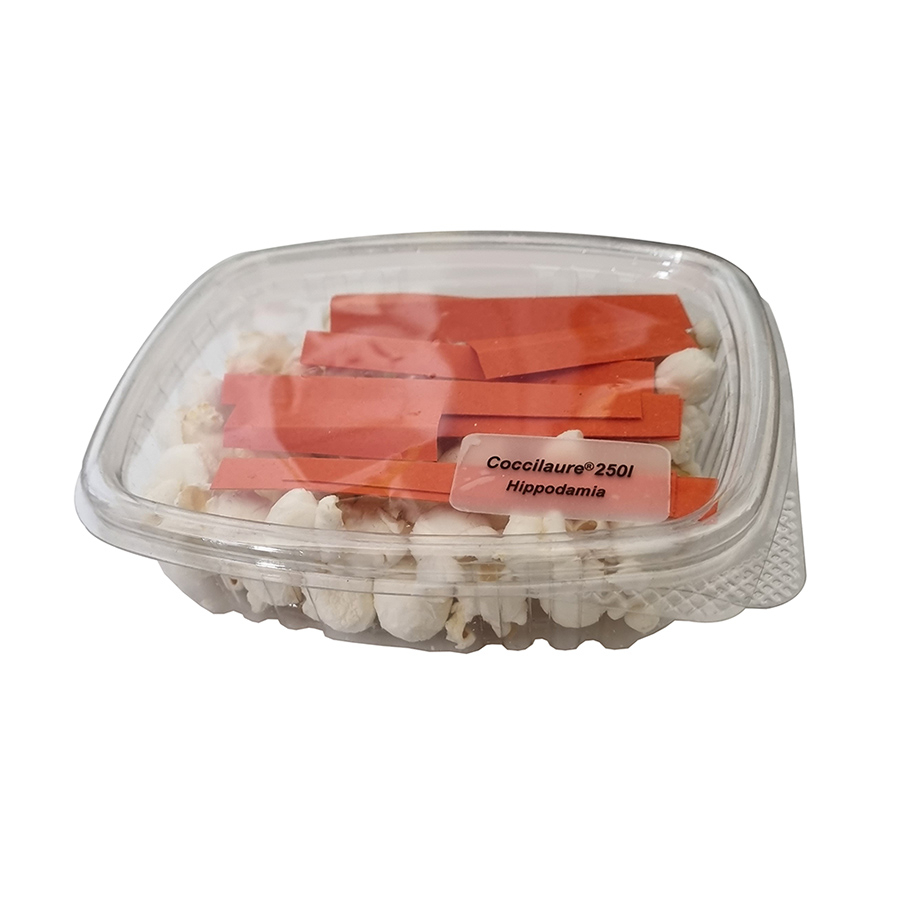
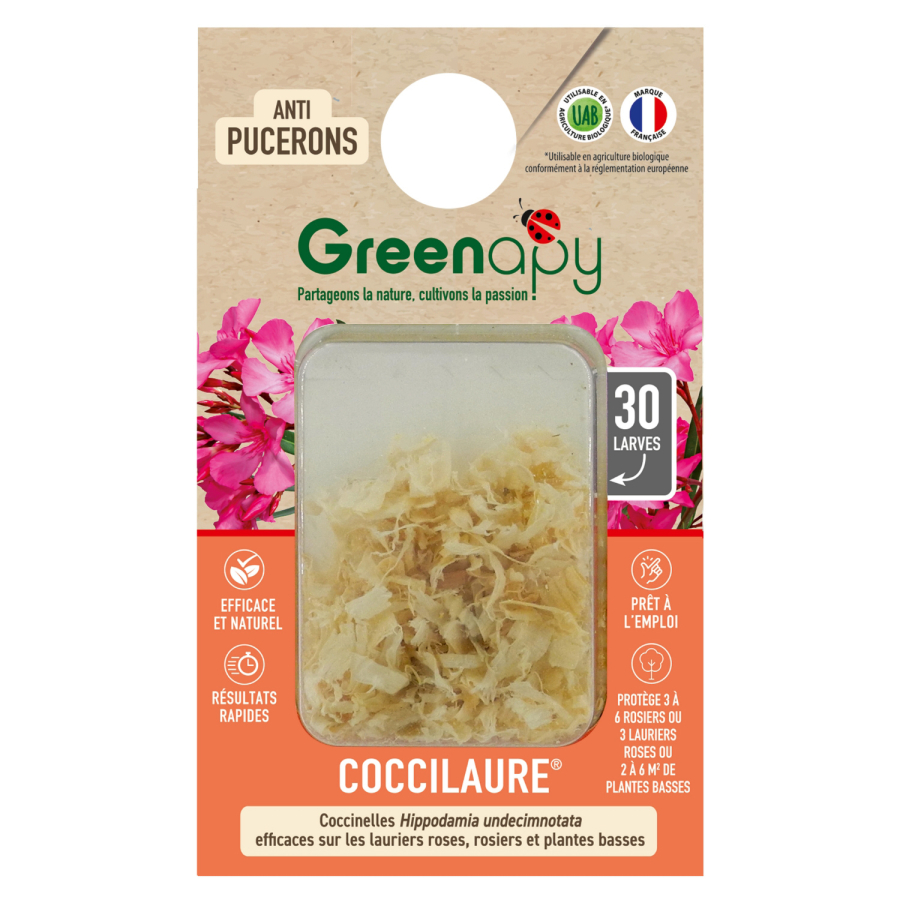
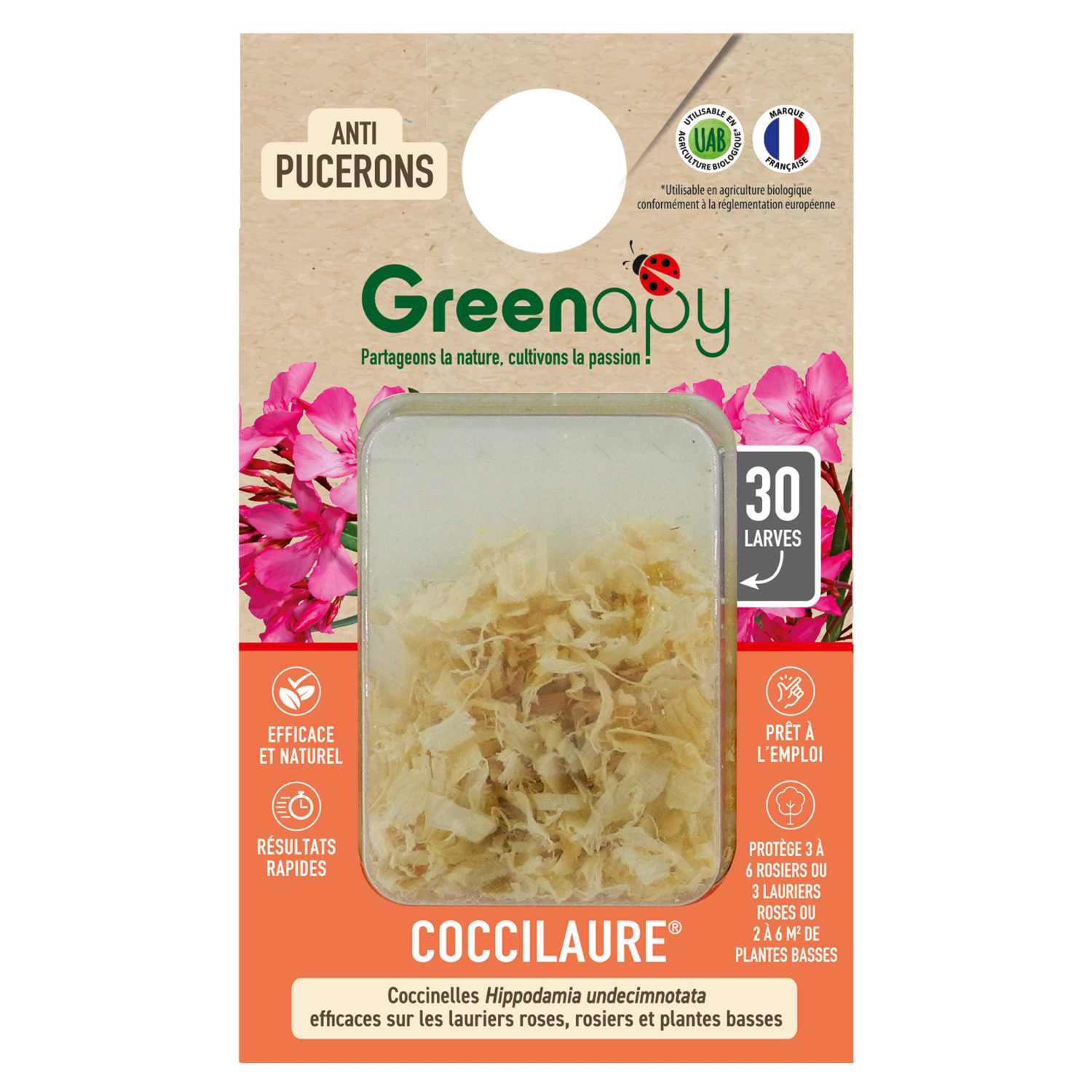
Larvae of Hippodamia undecimnotata ladybugs specially selected to eliminate aphids from roses and oleanders. Introduce directly onto colonies from March to July, adhering to optimal effectiveness conditions.

  • Ladybug adapted to yellow aphids on oleander and roses
  • Larvae more active than adults: stay on the plant for targeted action
  • Visible results in 2 to 5 days from 12°C
  • Use only as a curative treatment in the presence of live aphids
  • Removal of ants is essential before introduction
1 Packaging

2 Choisissez votre quantité et économisez

€10.43
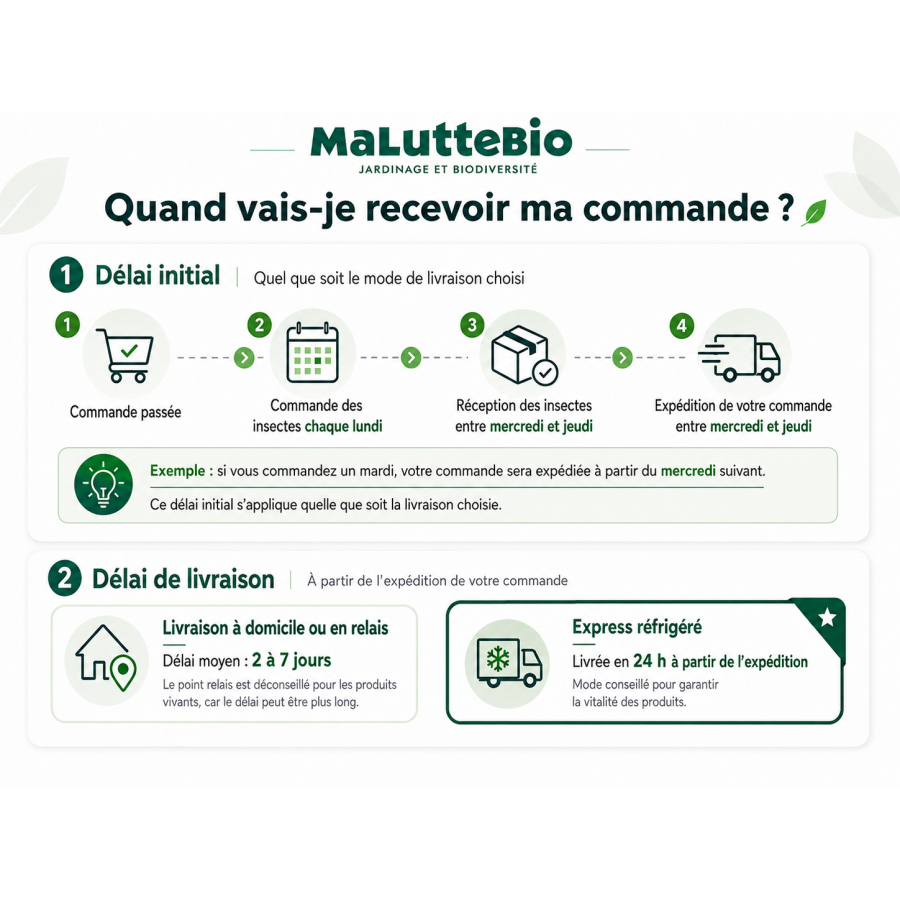
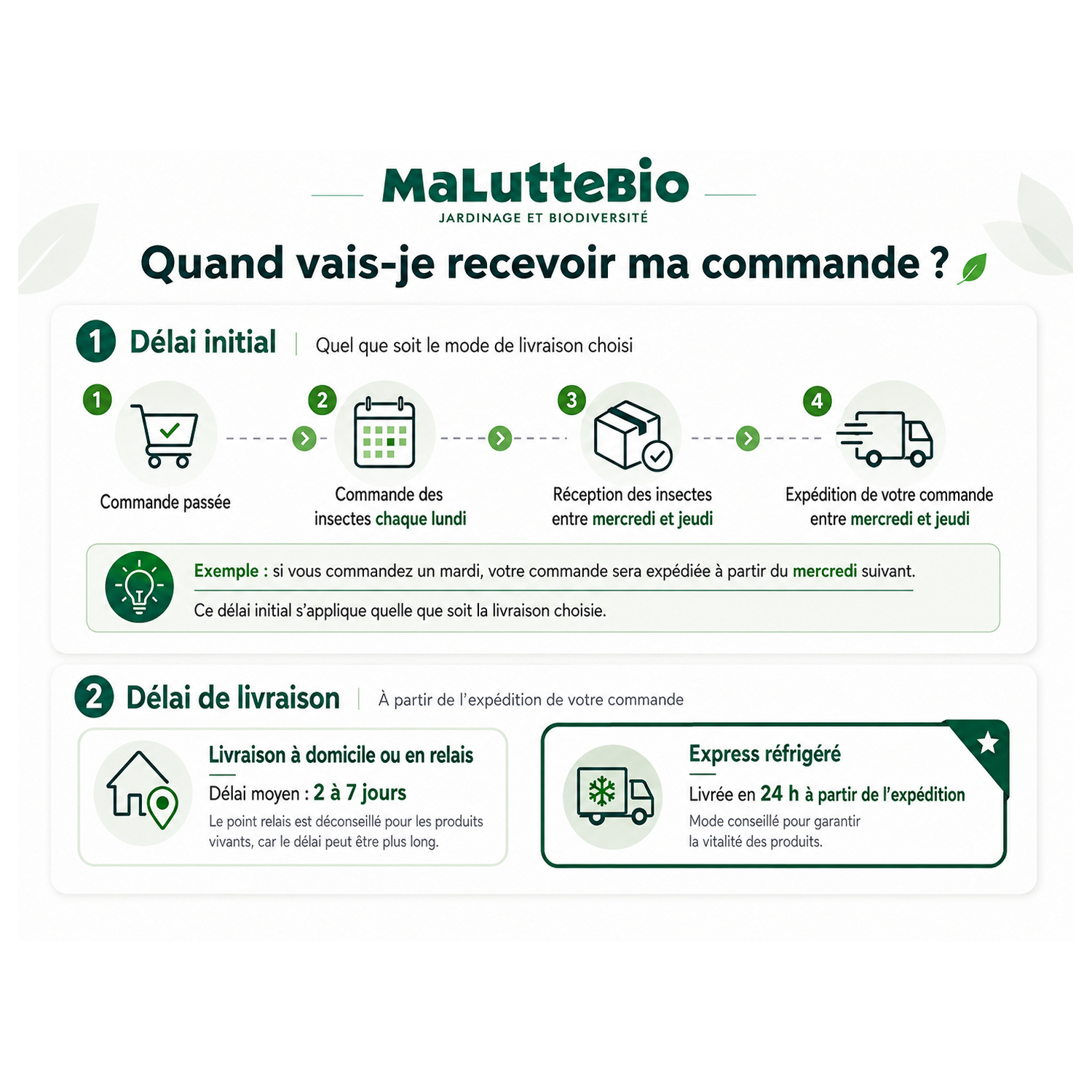
Delivered in approx. 1 to 3 days Delivered in approx. 1 to 3 days
100% secure payment 100% secure payment

Essentials for you:

Ladybug Shelter FSC
Ladybug Shelter FSC
  • Made from FSC pine wood and zinc
  • Front opening
  • Helps protect ladybugs
€11.42

Buy ladybugs for aphids: Hippodamia undecimnotata larvae for roses and oleanders

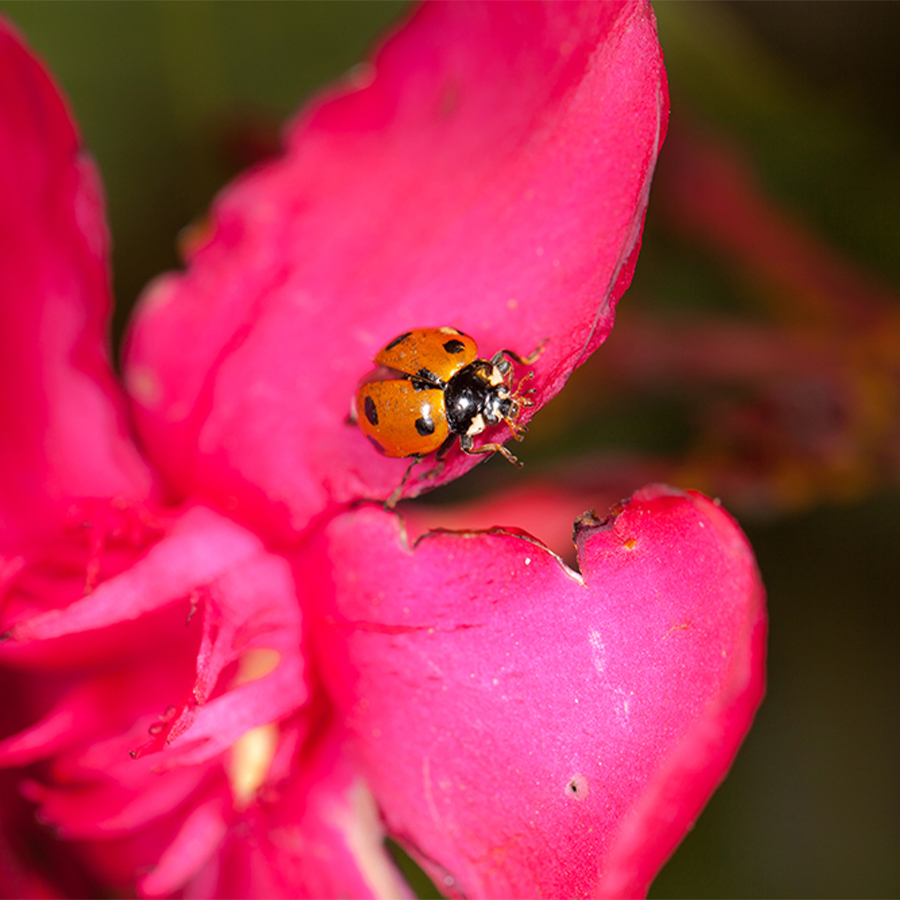
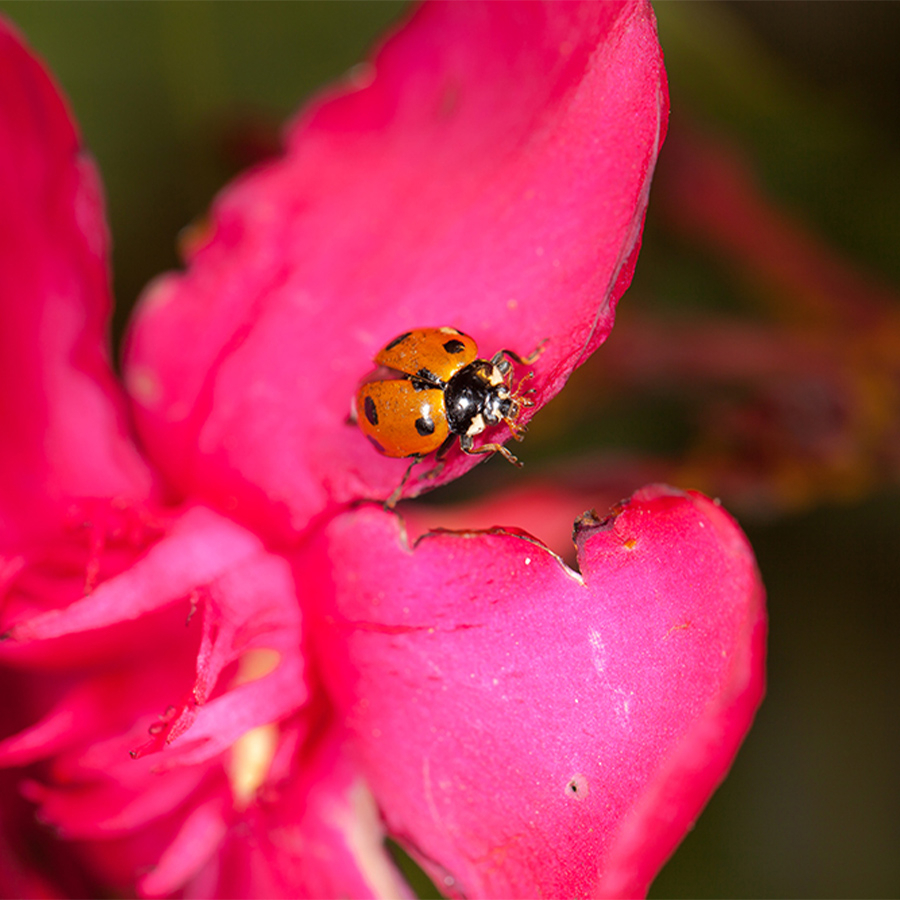
Aphids on oleanders, particularly the yellow aphid Aphis nerii, are difficult to combat with common ladybugs. The Hippodamia undecimnotata variety, naturally present in France, stands out for its specific efficacy against these pests. These larvae, more voracious than adults, remain on the plant and consume up to 60 aphids per day at all developmental stages.

Coccilaure is offered at the larval stage for immediate and targeted action. Unlike adult ladybugs, larvae do not fly away, ensuring optimal biological control on your roses, oleanders, hibiscus, beans, broad beans, and low plants.

When to use ladybug larvae for your plants?

  • Yellow aphids on oleander (Aphis nerii)
  • Colonies of black or green aphids on roses
  • Light to moderate infestation on low plants (hibiscus, beans, broad beans)
  • No recent chemical treatment (less than 3 weeks)

Life cycle and behavior of Hippodamia undecimnotata ladybug larvae

Hippodamia undecimnotata larvae are active from 12°C, allowing use starting in March. Their development takes about 15 days, after which they transform into adults. This variety is naturally adapted to oleander and rose aphids, actively feeding on colonies at all stages (winged, larval, or wingless).

Unlike adult ladybugs, larvae do not leave the plant once settled, ensuring continuous and effective biological control on infested areas.

Why do ladybug larvae work?

Hippodamia undecimnotata larvae are specifically selected for their appetite for oleander and rose aphids. Their voracity exceeds that of adults, consuming up to 60 aphids per larva per day. This makes them an ideal natural ally for targeted and lasting biological control.

For larvae to be effective, several conditions must be met: no recent chemical treatment, prior removal of ants (which protect aphids), and a minimum temperature of 12°C. Larvae only feed on live prey, making this a curative rather than preventive treatment.

How to correctly introduce ladybug larvae?

1

Open the box in the shade, preferably in the late afternoon to avoid direct sunlight.

2

Place the larvae directly on the infested areas, as close as possible to the aphid colonies.

3

Avoid watering the plants immediately after introducing the larvae to prevent disturbing them.

4

Do not expose the box to sunlight before use to preserve the larvae's activity.

5

Introduce the larvae quickly after receipt, as they are living organisms sensitive to storage conditions.

Best time to use ladybug larvae

Jan
Feb
Mar
Apr
May
Jun
Jul
Aug
Sep
Oct
Nov
Dec
Optimal use
Possible use

Avis clients

0,0/5
Basé sur 0 avis

Several reasons may explain low activity: ants on the plant repelling the larvae, recent chemical treatment (less than 3 weeks), or poor thermal conditions during transport. If the larvae are dead upon opening, contact customer service for a possible refund.

Hippodamia undecimnotata is less effective on tall plants or trees. It is specifically adapted to roses, oleanders, hibiscus, and low plants. For trees, consider other biological control solutions suited to their size and environment.

First results are usually visible in 2 to 5 days, provided optimal conditions (temperature ≥ 12°C, absence of ants and chemical residues). Larvae grow quickly and transform into adults in about 15 days, extending the biological control action.

You can also combine this treatment with black soap spray to quickly reduce dense colonies before the larvae take effect.

It is best to introduce the larvae quickly after receipt, as they are living organisms sensitive to storage. Do not store the closed box for several days, especially in a warm or humid environment.

Loading...