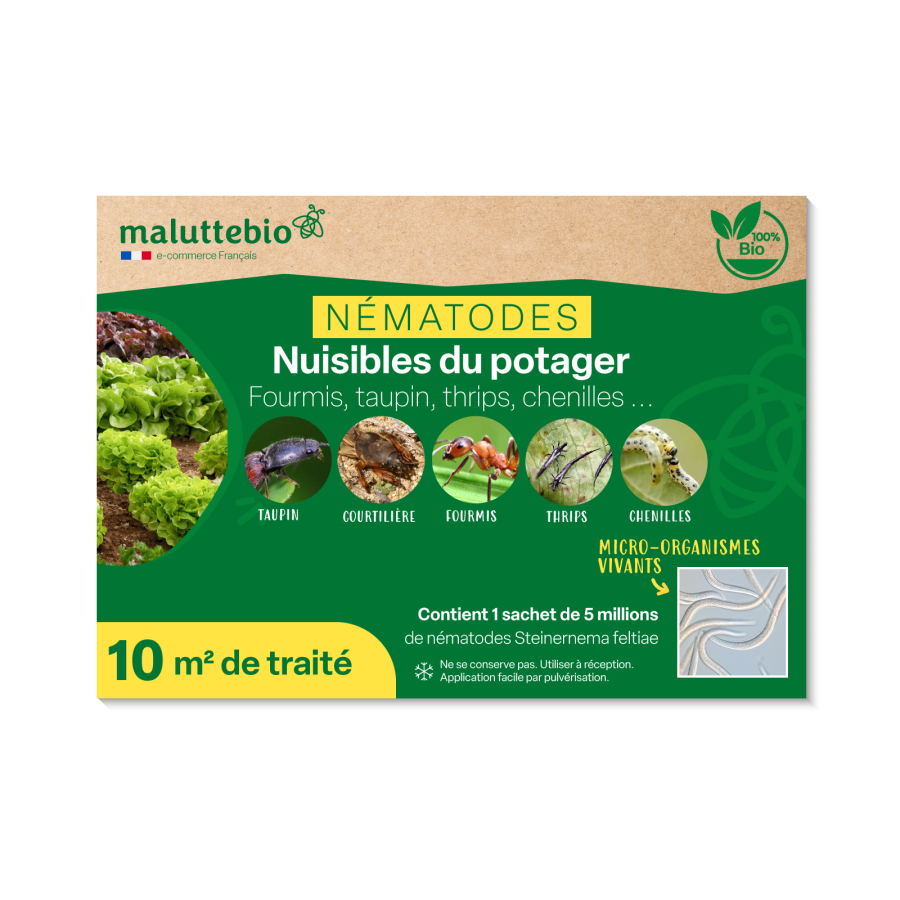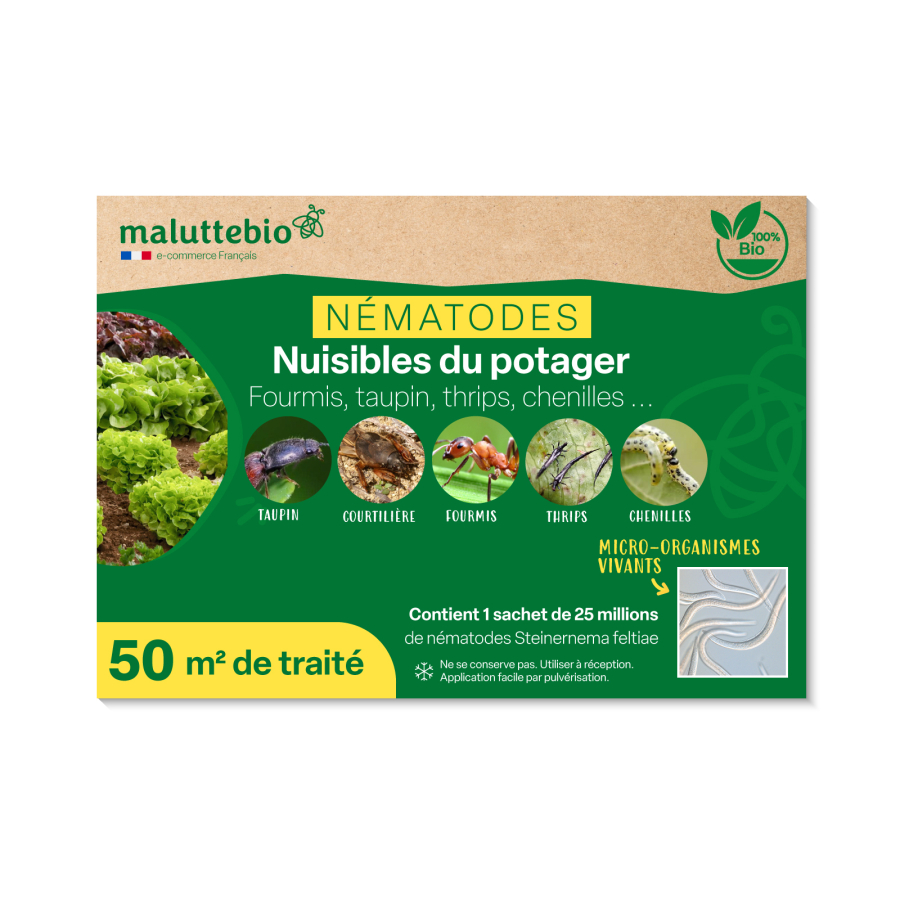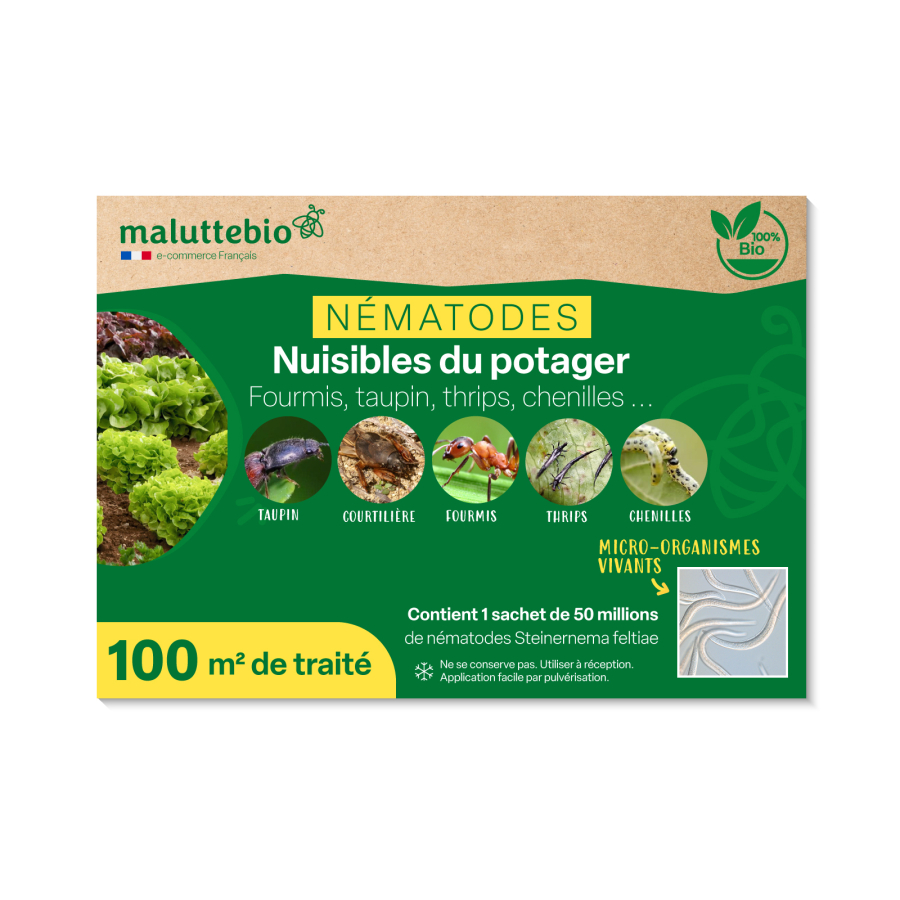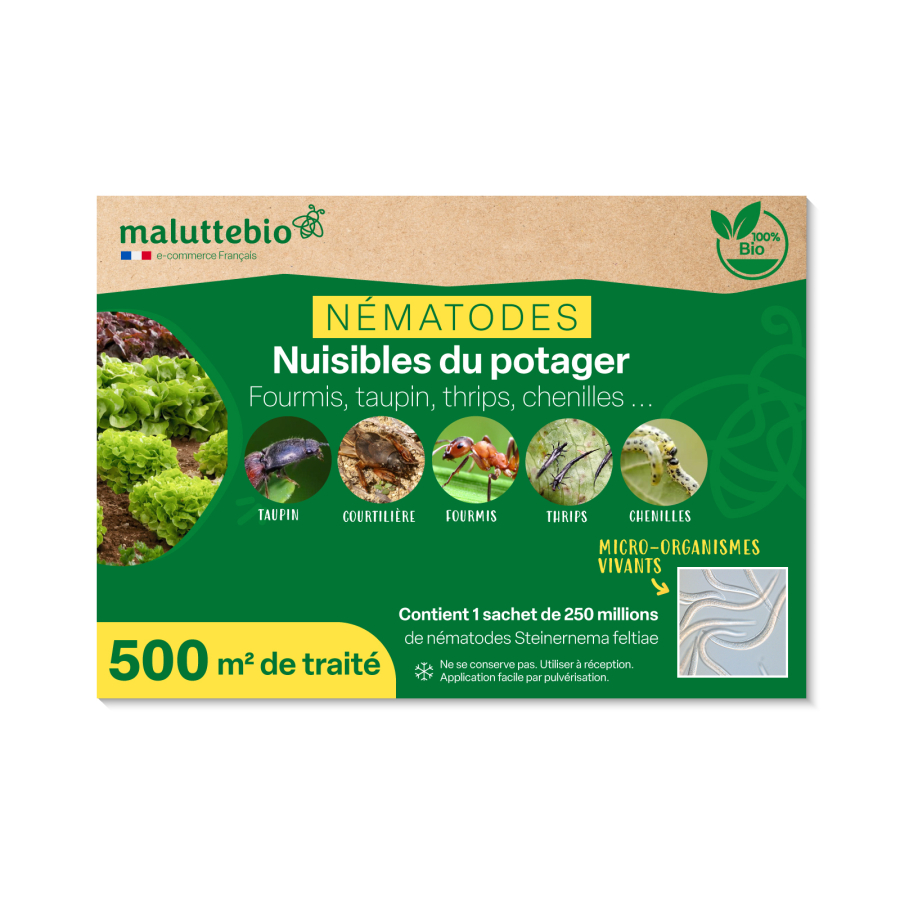
SF nematodes against fungus gnats, wireworms, vegetable garden and orchard caterpillars, and ants

Are your plants and vegetable beds affected by fungus gnats, wireworms or ants? Discover a targeted natural biological solution.

Read more
Select an option
€9.90
In stock

Delivered within 2 to 3 days
Free shipping from €49
100% secure payment

  • Targeted control of fungus gnats, wireworms, caterpillars and ants
  • Easy application by watering into soil and substrate
  • Live nematodes – 100% natural solution
  • Safe for humans, pets and beneficial plants
  • Visible results quickly in the soil
  • Suitable for vegetable gardens, orchards, borders and potted plants

Delivered within 2 to 3 days

Insects targeted with Sf nematodes

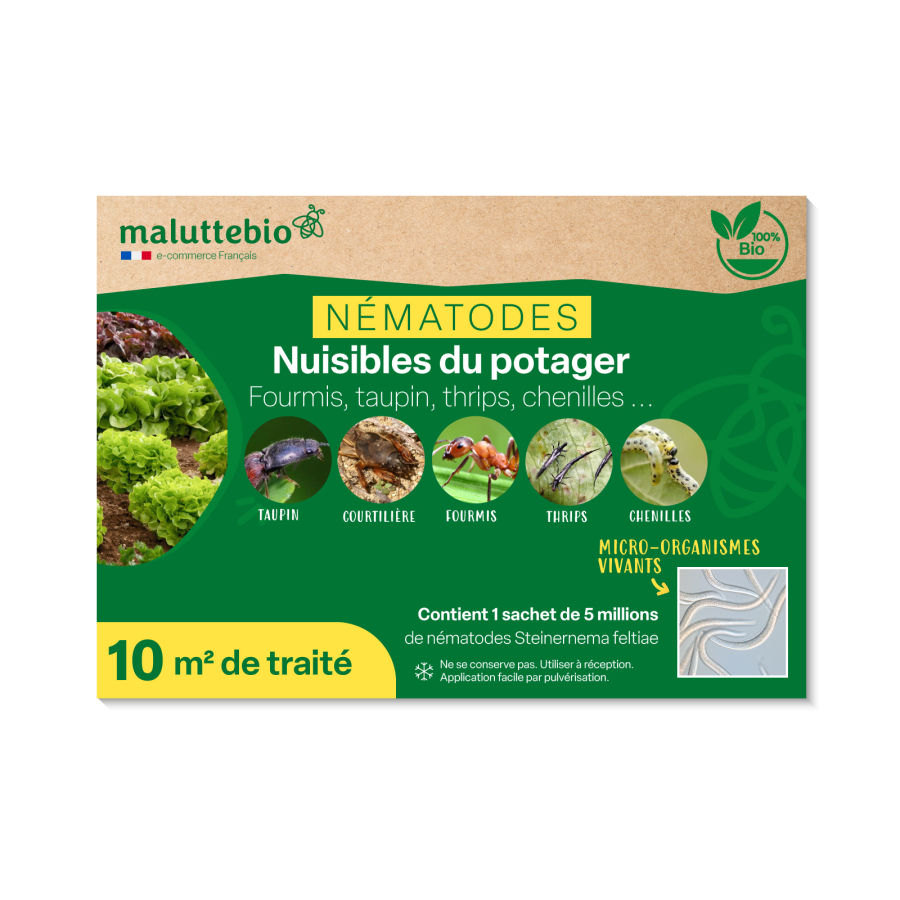
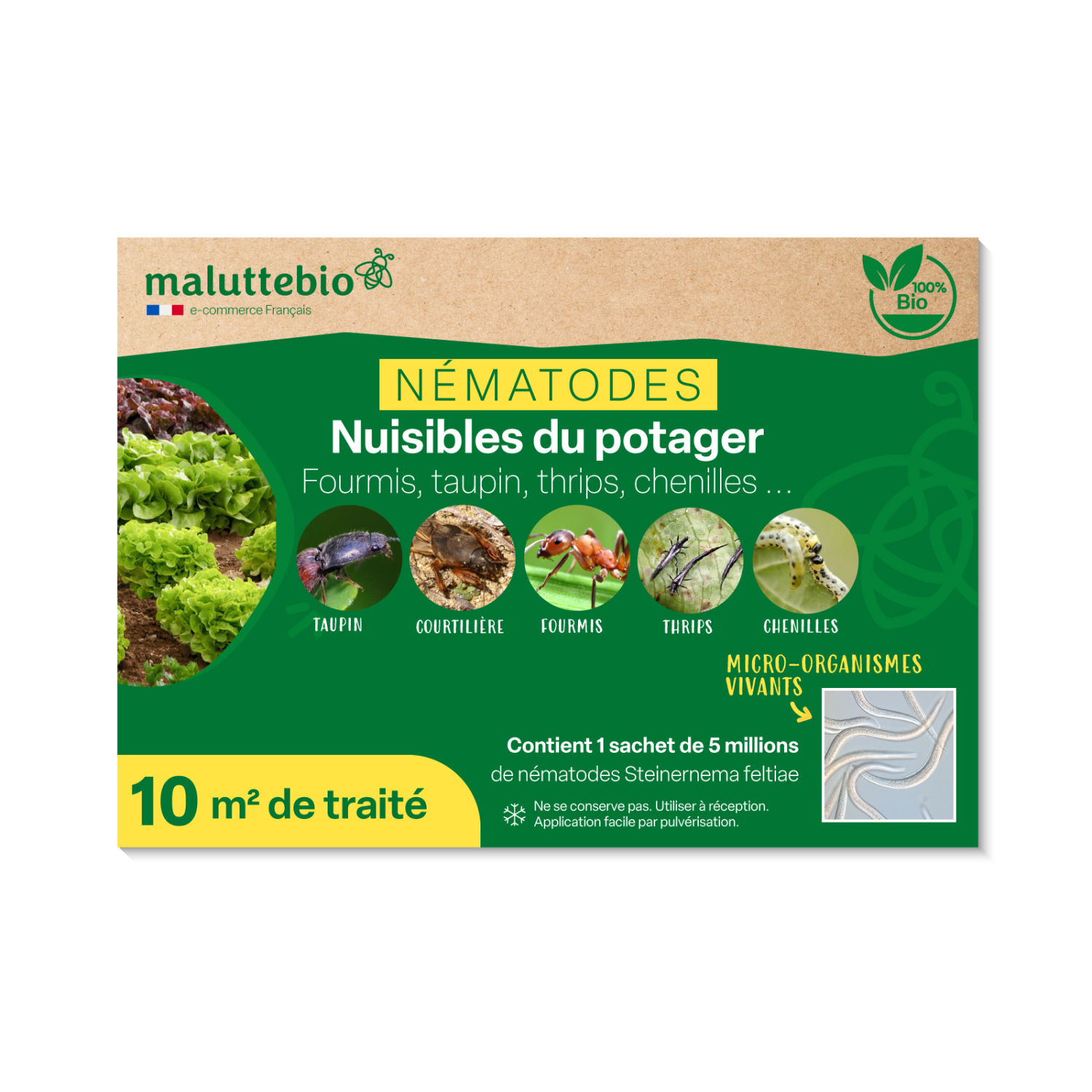
SF nematodes (or Steinernema feltiae) help control different types of pests, listed below:

  • Fungus gnats (Bradysia and lycoriella)
  • Wireworm larvae
  • Orchard caterpillars (codling moth of apples and pears, plum codling moth)
  • Vegetable garden caterpillars (leek moth, tomato leaf miner).
  • Ants

How to choose the right nematode pack size: 25, 50, 250 or 500 million?

For SF nematodes, you can choose between 3 pack sizes, suited to your needs:

  • 5 million nematodes
  • 25 million nematodes
  • 50 million nematodes
  • 250 million nematodes
  • 500 million nematodes

You determine the number of nematodes needed depending on the intended application or the area to be treated.

How are Steinernema feltiae nematodes used?

Before any use of nematodes, the soil (or the trunk, in the case of orchard caterpillars – codling moth) must not have been treated in the three weeks prior to application and must not be treated again for one month. The soil must be moistened beforehand to facilitate the dispersal of the nematodes. Apply in the morning, in the evening, or in overcast weather because they are very sensitive to U.V.

To apply SF nematodes, you have two options: a watering can for the soil or a sprayer for trees

With a watering can for 10m²

  • Dilute the contents of the box in 5 liters of water
  • Mix for 3 minutes to distribute the nematodes evenly in the water
  • Top up with 5L of water (i.e., 1 liter/m²)
  • Spread on the soil with a watering can rose on and near the plants to be treated

With a sprayer for 1 tree

  • Clean the equipment before use and remove all filters before use
  • Nozzle diameter > 0.5 millimeters
  • Pressure < 5 bars

Technique for trees: spray the nematodes thoroughly on the trunk and foliage and keep agitating during treatment.

After application, water the treated area generously (1 liter/m²) to allow the micro-worms to disperse and spread well over the soil surface, to keep them alive and allow them to move. Keep the soil moist for at least two weeks, and on trees keep the trunk moist for at least 12 hours.

Tips

It is recommended to use the anti–fungus gnat, wireworm, vegetable garden and orchard caterpillar, and ant nematodes as soon as you receive them, but you can store them away from sunlight, preferably in the refrigerator at a temperature between 4 and 12°C.

Pest Type of treatment Application period Area treated with 5 M nematodes
Fungus gnat
(sciarid larvae)
Soil treatment All year round* 10 m² or
500 liters of potting soil
Wireworm larvae Soil treatment March and June
September to November
1 m²
Orchard caterpillars On the trunk and the soil under the branches September to December 1 tree
Vegetable garden caterpillars Foliar treatment April to September 30 m²
Ants Soil treatment April to September 5 anthills

* For fungus gnats, treatment is possible year-round for protected crops (greenhouse, conservatory, tunnel…) or outdoors, but the soil temperature must be between 12°C and 28°C.

When should you use Sf nematodes or Steinernema feltiae?

J F M A M J J A S O N DIdealPossible

What is a fungus gnat?

The fungus gnat, also known as the mushroom gnat or potting soil fungus gnat, is an insect belonging to the Sciaridae family. These gnats are often a problem in indoor growing environments, such as greenhouses, nurseries, and potted plant cultivation. Here are some key characteristics and important information about fungus gnats:

  • Appearance: fungus gnats are generally small, measuring a few millimeters long. They have dark wings and slender bodies.
  • Life cycle: these gnats reproduce in potting soil or growing substrate. The larvae feed on decaying organic matter, fungi, and tender plant roots.
  • Damage: fungus gnat larvae can damage plant roots, thereby weakening plant growth. Adults, meanwhile, can be a nuisance because they may be attracted to light and fly around indoor plants.

You might also like

Loading...