Solid wood bat box, made in Europe

Excellent +1800 avis sur Société des AVIS GARANTIS

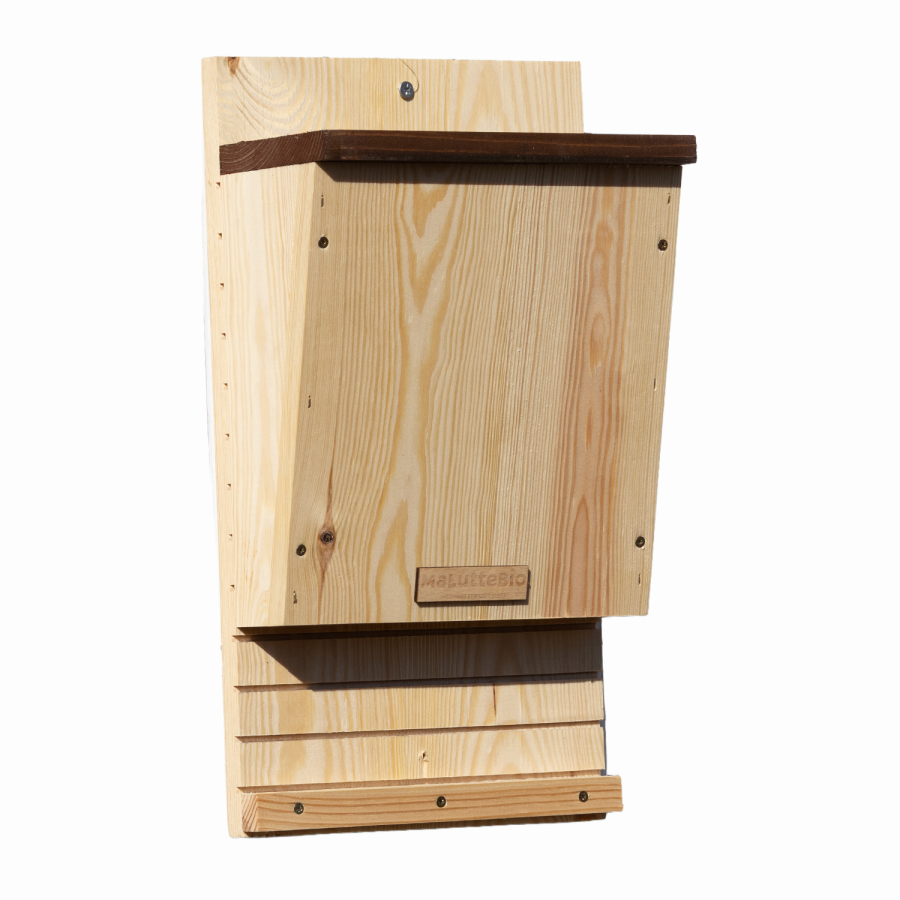
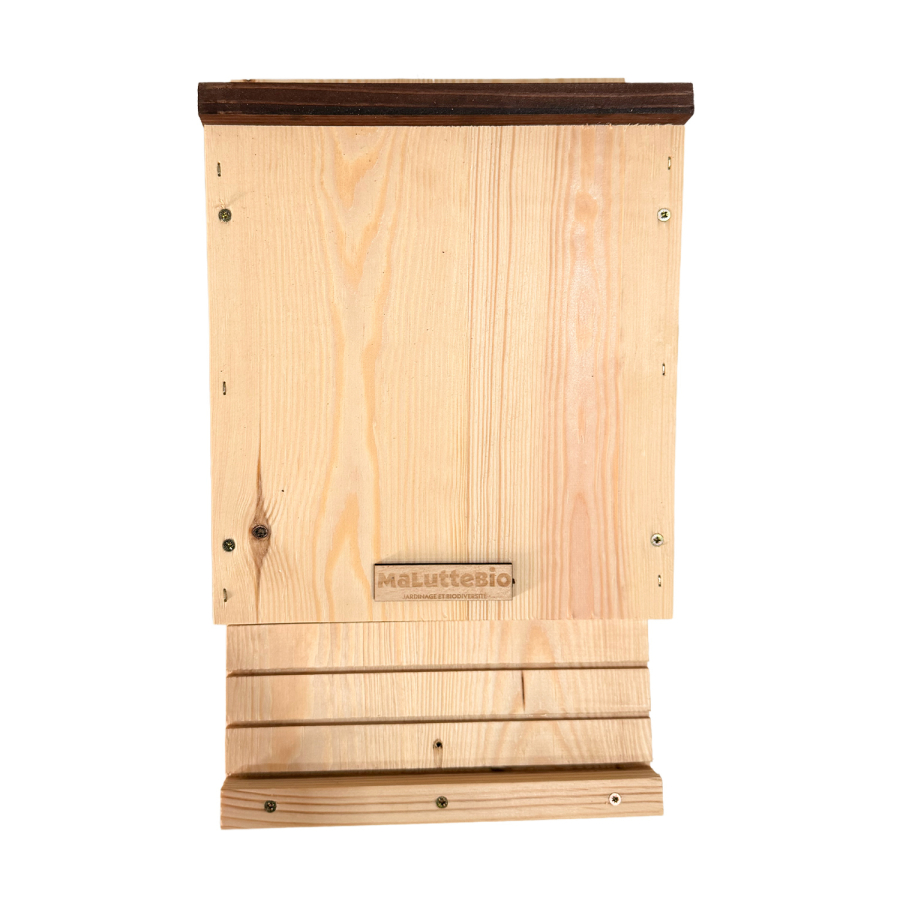
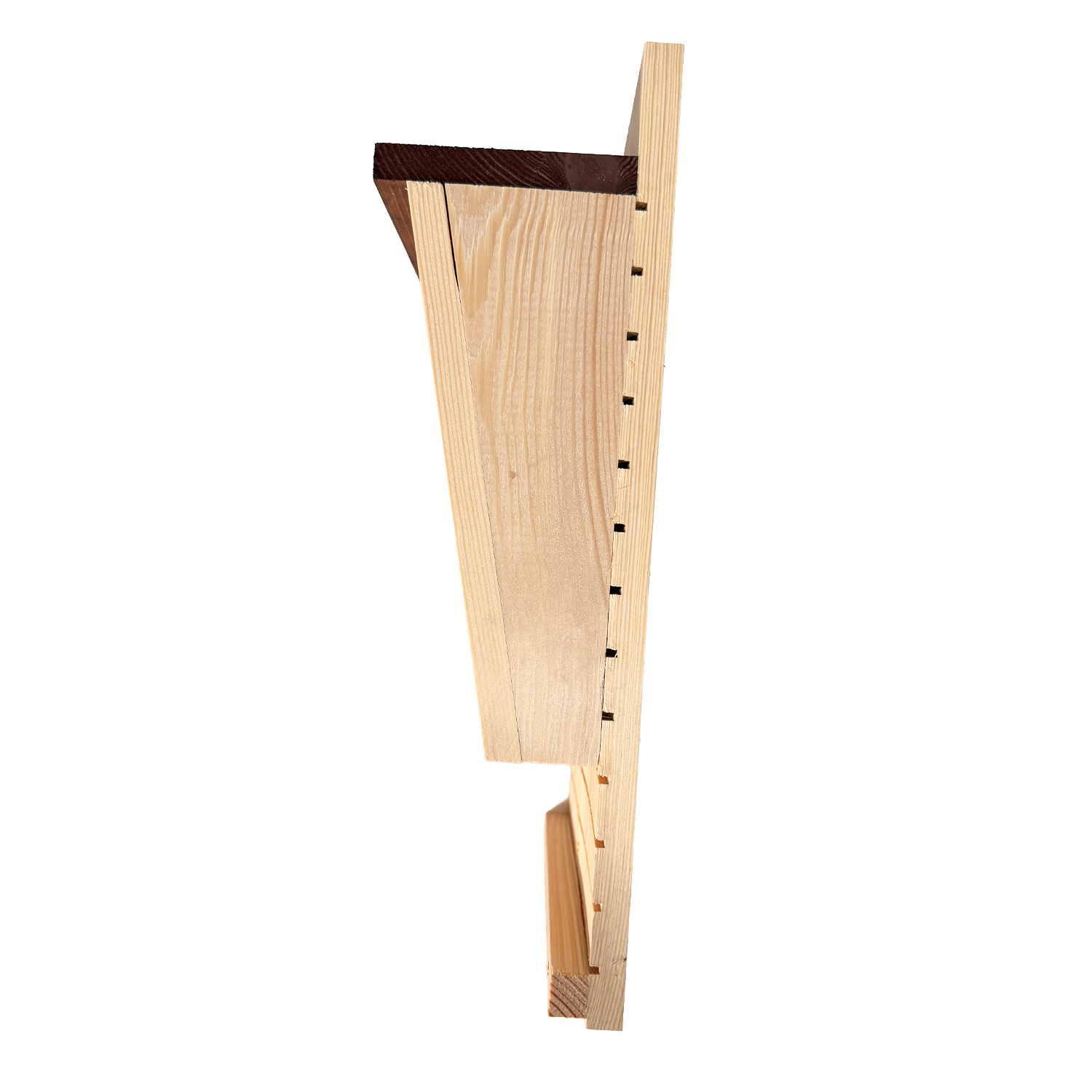
Solid pine wood bat box (15 mm), made in Europe, with a bottom entrance, ribbed landing ramp and inner gripping grooves, offering pipistrelles a safe, long-lasting roost all year round.

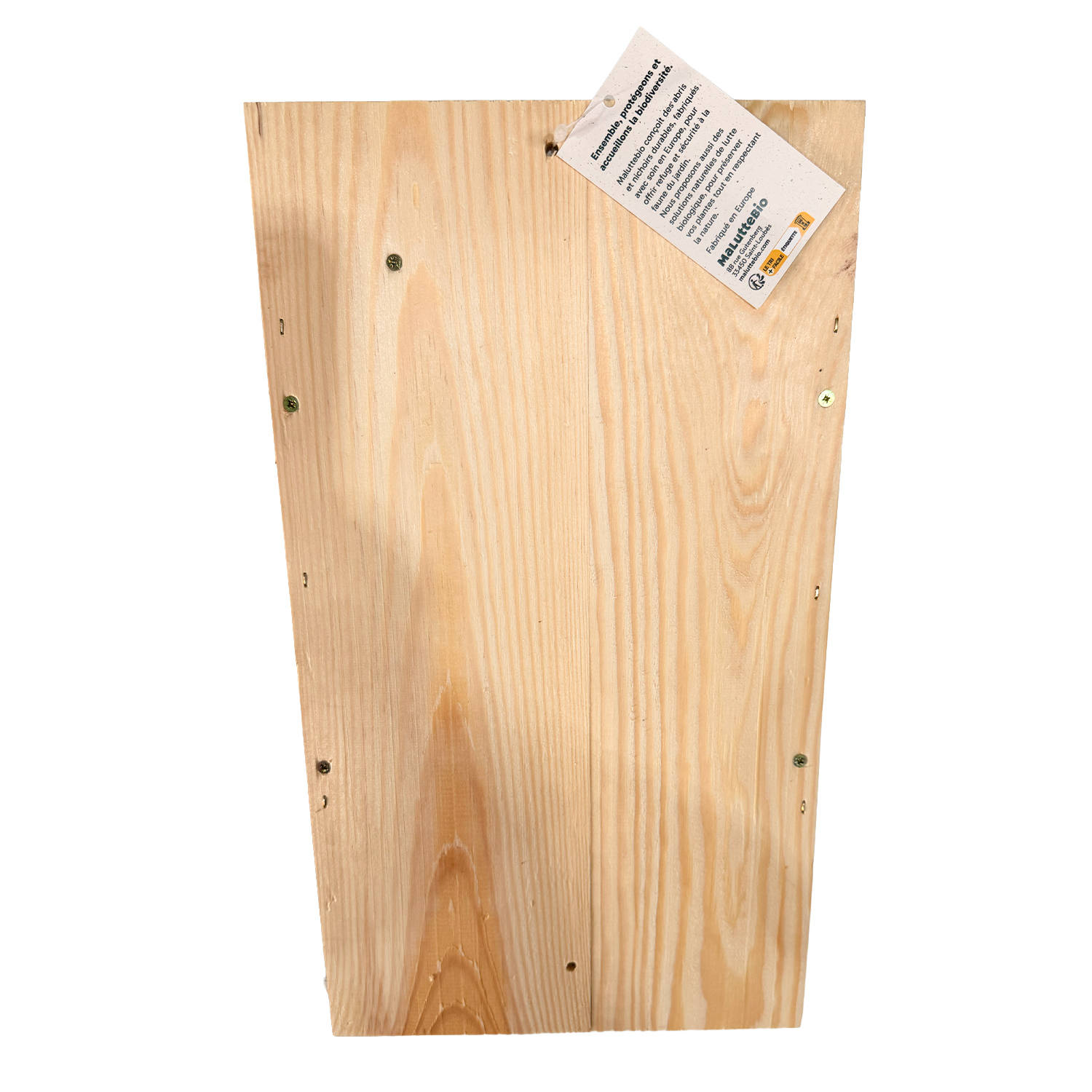
  • Solid pine wood, 15 mm
  • Bottom entrance, ribbed ramp
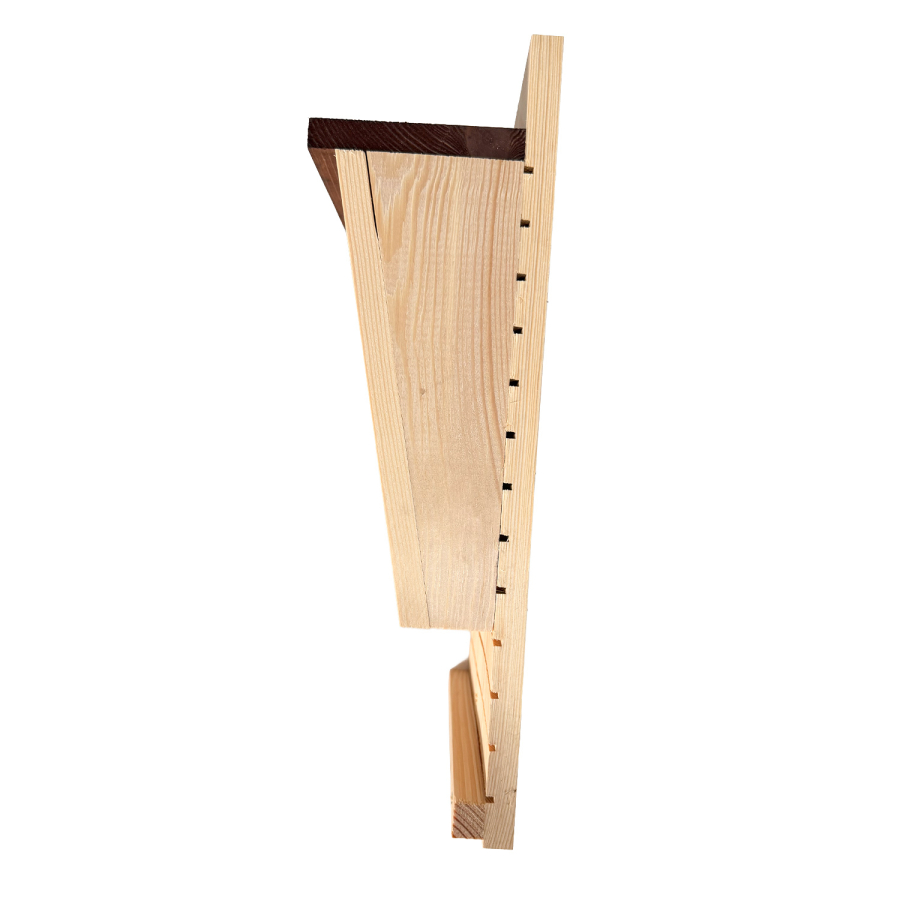
  • Inner gripping grooves
  • Stained roof, eco-friendly finish
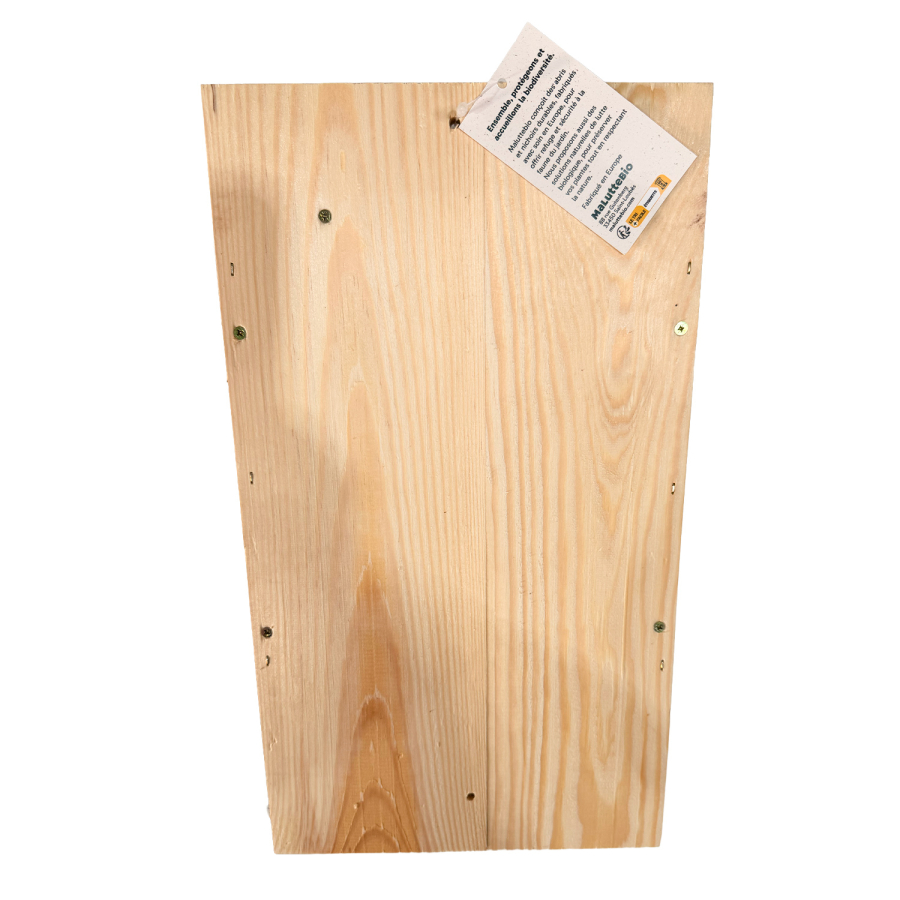
  • 2 mounting holes
  • Made in Europe
€19.08
Delivered in 1 to 3 days Delivered in 1 to 3 days
Paiement 100% sécurisé Paiement 100% sécurisé

Indispensables pour vous :

Bat house
Bat house

Want to attract and protect bats in your garden? Discover how this natural bat house provides a safe shelter.

€13.25
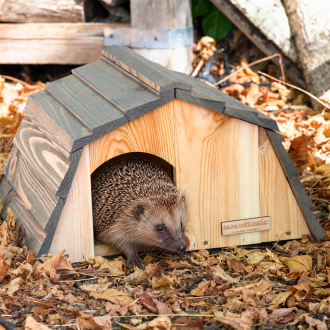
Hedgehog House in Solid Wood with Removable Roof

Solid pine wood hedgehog house (15 mm), made in Europe, with a removable stained roof and a predator-proof 11x14 cm entrance, delivered pre-assembled to welcome a family of hedgehogs all year round.

€41.58

Bat box – natural shelter in thick 15 mm wood, made in Europe

Installing a bat box is a simple and highly effective way to support biodiversity and natural control of nocturnal insects 🦇🌿. Protected species in France, bats suffer greatly from the disappearance of their natural shelters (old trees, attics, cracks in buildings). This bat box provides them with a safe, quiet and long-lasting refuge to rest, gather and reproduce.

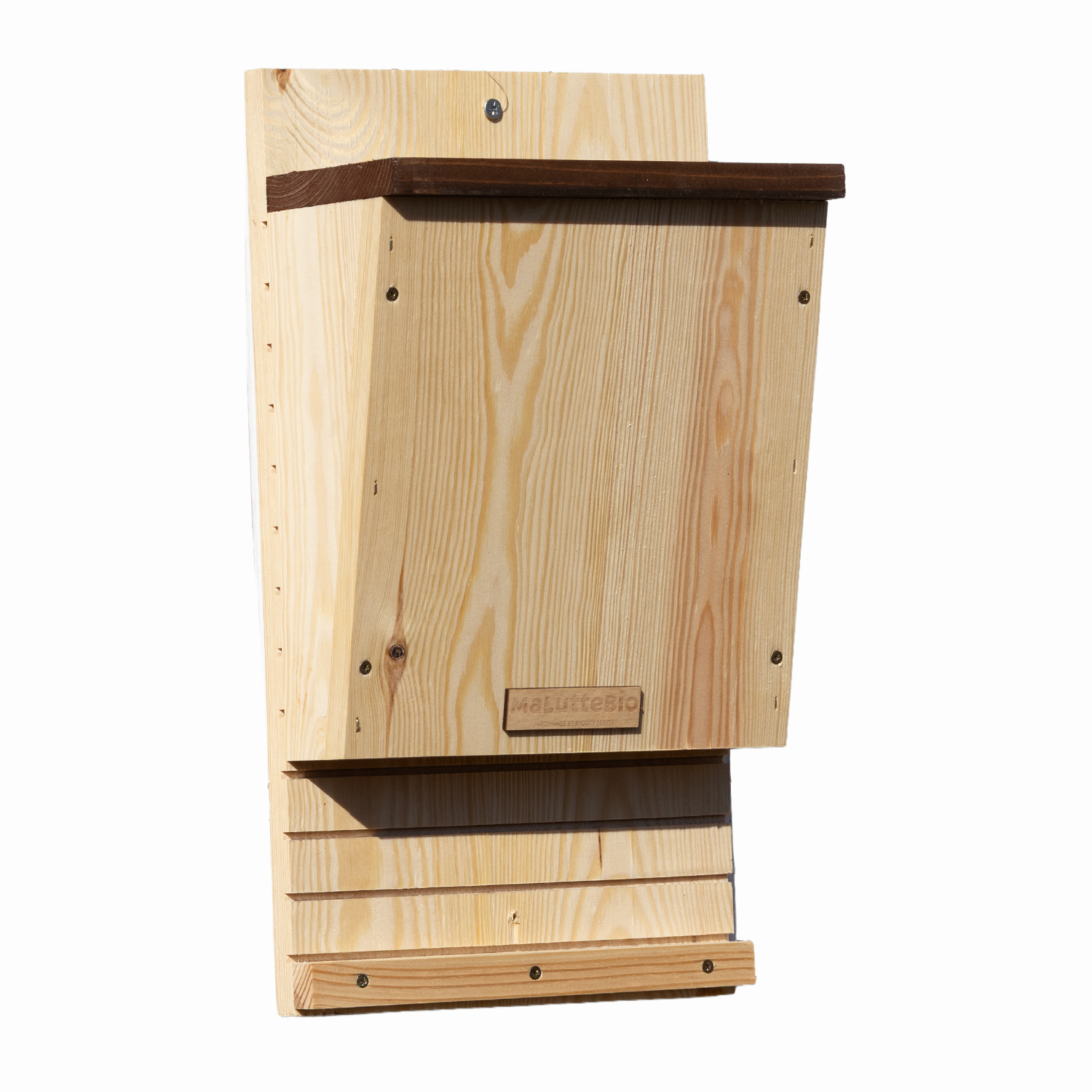
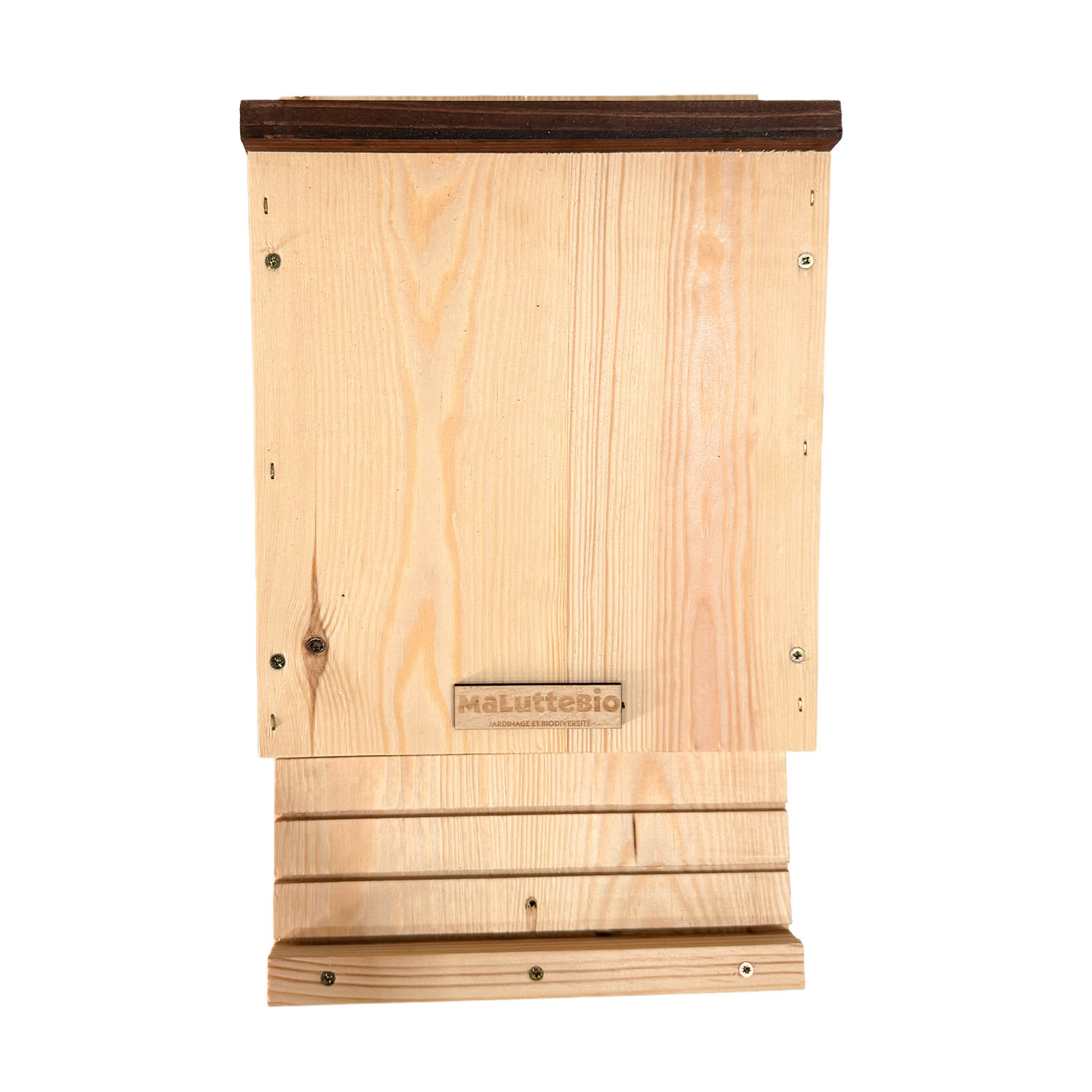
  • Specially designed for bats: vertical shelter with bottom entrance
  • Thick 15 mm pine wood: thermal insulation & durability
  • Horizontal interior grooves: easier grip and movement
  • Ribbed ramp: secure access from the outside
  • Stained roof (eco-friendly water-based stain)
  • 2 mounting holes for stable installation
  • Made in Europe

Why install a bat box?

The bat is an insect-eating nocturnal mammal. Unlike birds, it hunts at night and captures a large number of insects that are never seen during the day. A single bat can consume several thousand insects in one night.

Installing a bat box helps to:

  • Provide shelter for a protected species
  • Promote local biodiversity
  • Naturally reduce harmful insects
  • Limit the presence of mosquitoes around the house

In line with biological control

Bats play a major role in the garden’s natural balance. They feed in particular on:

  • Mosquitoes
  • Noctuid moths (night moths responsible for cutworms)
  • Harmful night moths
  • Small flying insects that are harmful to crops

By installing a bat box, you perfectly complement the action of insect-eating birds that hunt during the day. It’s a natural, silent and long-lasting solution, without any chemicals.

Which bat species can move in?

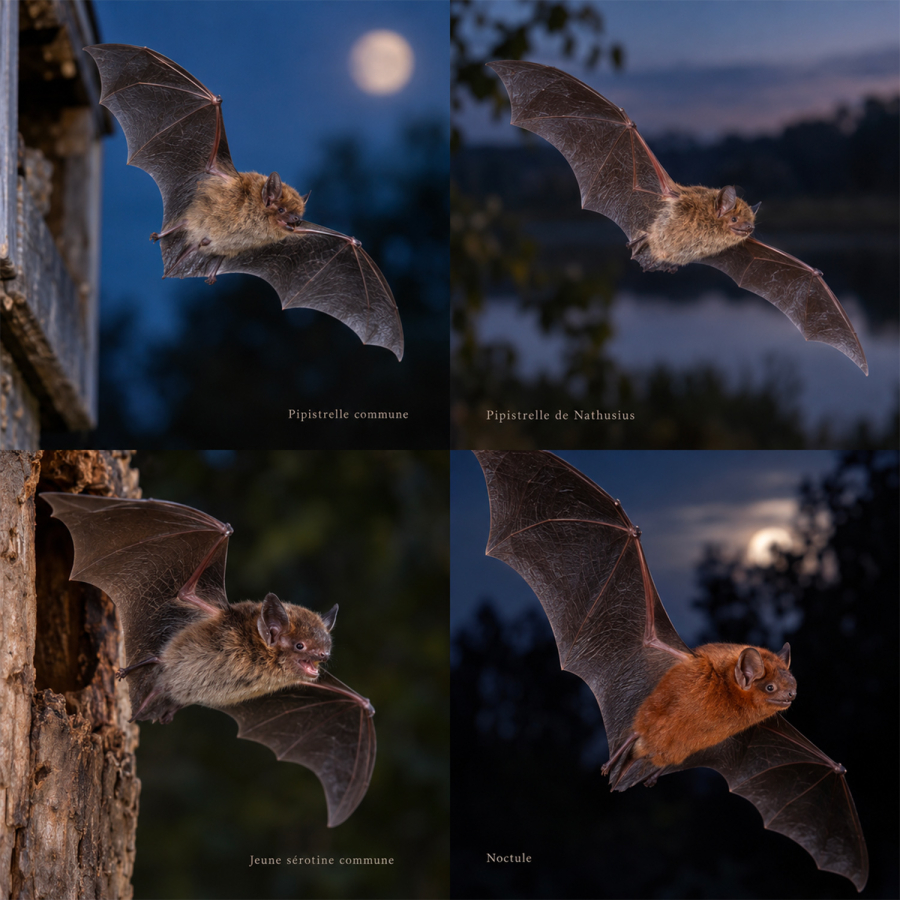
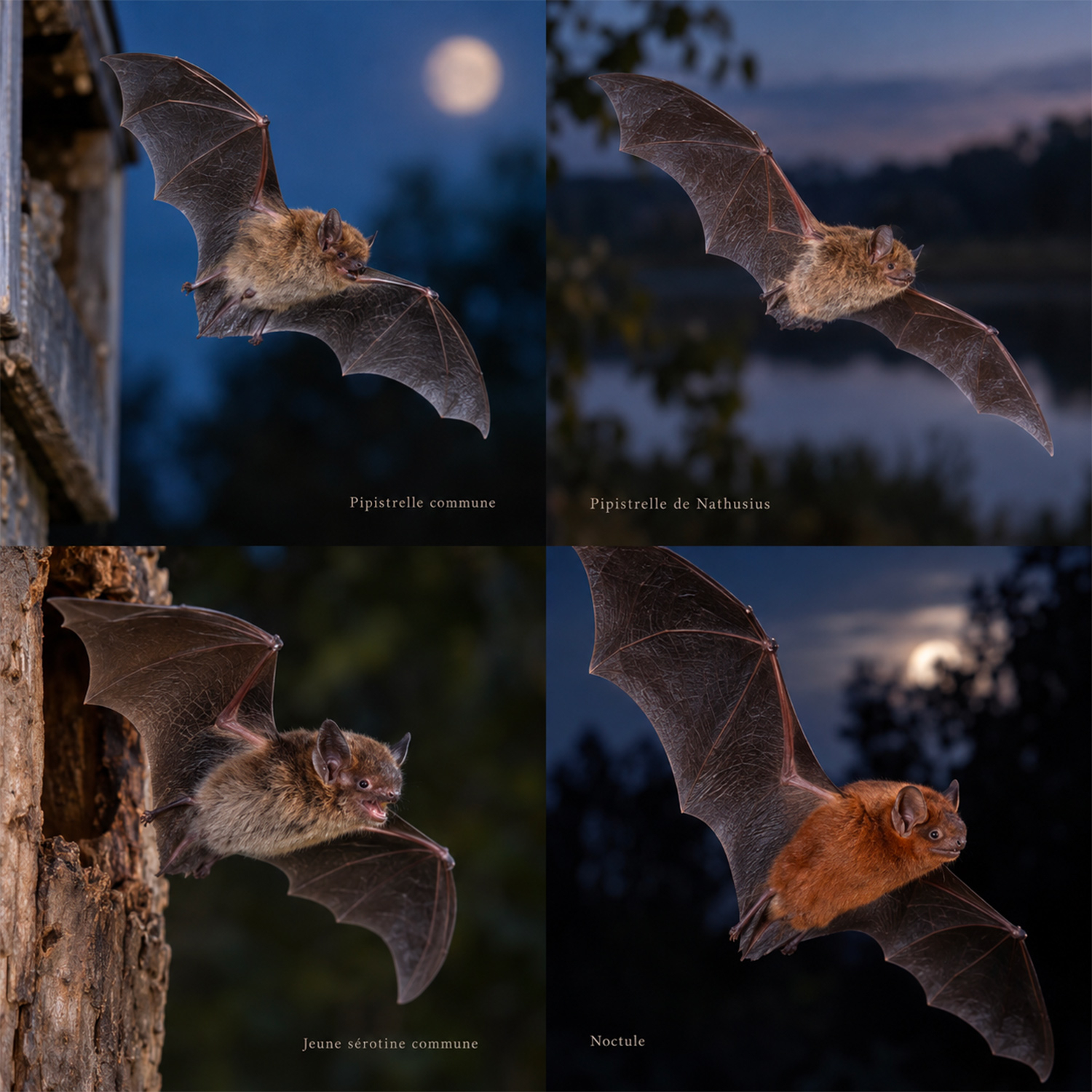
In France, several species can use this type of bat box, including:

  • The Common pipistrelle (the most common in gardens)
  • The Nathusius' pipistrelle
  • The Serotine bat (young individuals)
  • The Noctule (occasionally)

These species look for narrow, vertical, well-protected shelters similar to cracks in trees or buildings, which this bat box faithfully replicates.

A shelter designed for their lifestyle

The inside of the bat box features horizontal grooves that allow bats to grip, hang and move around easily inside. The ribbed ramp makes access easier from the bottom entrance.

The stained roof effectively protects against water infiltration and limits wood rot, ensuring excellent longevity for the shelter.

Placement and installation

To maximize the chances of occupancy, placement is essential:

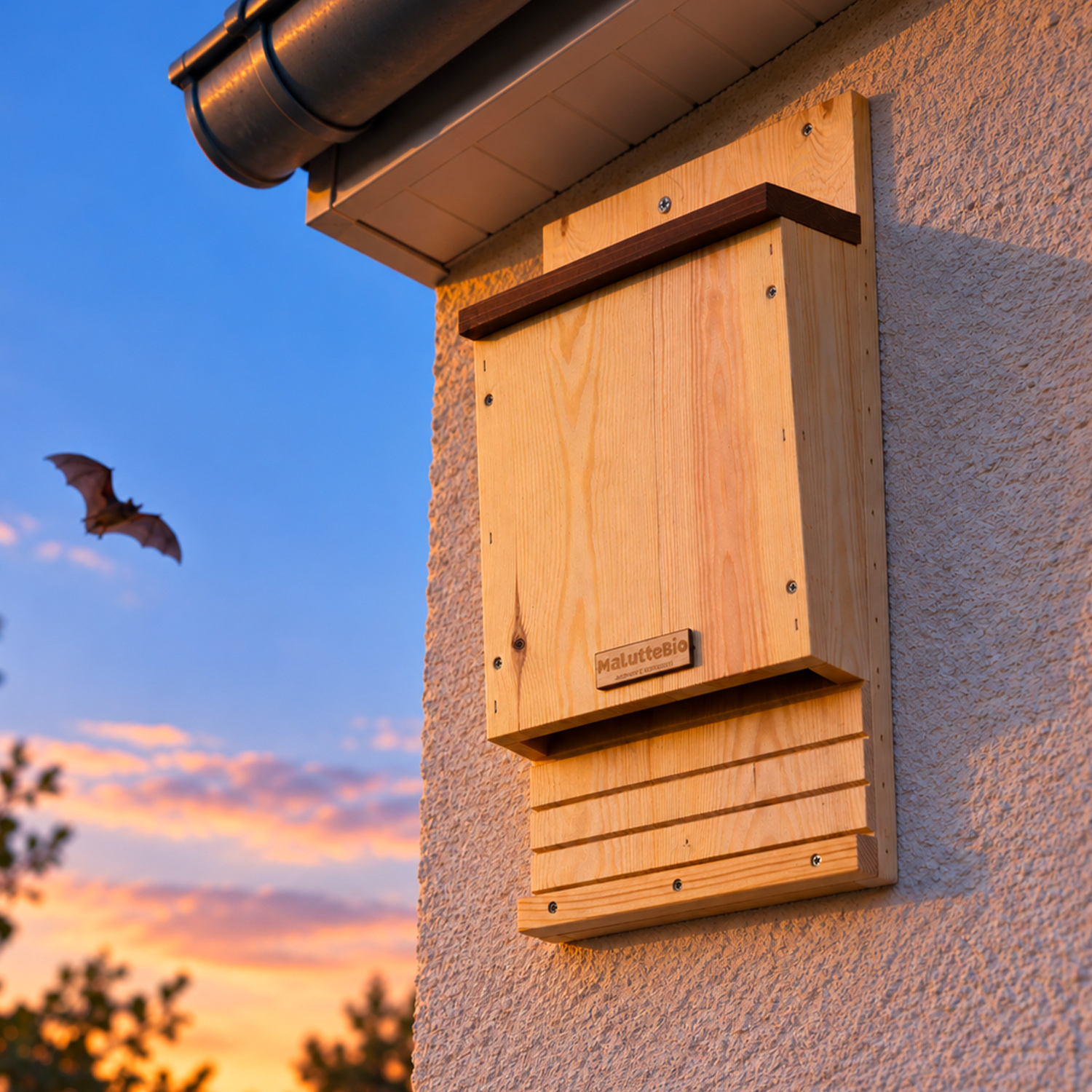
  • Orientation: south or south-east all year round
  • Height: between 2.5 and 5 meters
  • Support: wall, facade, tree or post
  • Clear access: no branches or obstacles in front of the entrance

Tip Maluttebio: it is recommended to install a second bat box facing north, to provide a cooler shelter during intense summer heat. Bats can then choose the most suitable roost depending on the season.

Maintenance and durability

This bat box is designed to be maintenance-free. It should never be opened or cleaned, so as not to disturb the occupants.

To further extend its lifespan, we recommend applying linseed oil to the exterior wood (excluding the entrance) every few years. This will strengthen the wood’s natural protection.

Technical specifications

  • Type: bat box
  • Material: pine wood
  • Wood thickness: 15 mm
  • Roof: stained wood (eco-friendly water-based stain)
  • Access: bottom entrance with ribbed ramp
  • Mounting: 2 mounting holes
  • Dimensions: length 22 cm – width 10 cm – height 34 cm
  • Maintenance: none
  • Manufacturing: Europe

The little + Maluttebio

Discreet, silent and harmless, bats are precious allies for gardeners. Installing a bat box means taking concrete action for nature while enjoying a healthier garden, without mosquitoes or chemical treatments 🦇🌿

Avis clients

0,0/5
Basé sur 0 avis

Fixez le nichoir en hauteur, dans un endroit ensoleillé, avec une entrée bien dégagée et sans éclairage la nuit à proximité. Un jardin sans pesticides, avec des haies, des fleurs qui attirent les papillons de nuit ou un point d'eau, offre aux chauves-souris de quoi se nourrir. Les rainures à l'intérieur de ce nichoir leur permettent de s'accrocher, et sa rampe nervurée les aide à entrer.

Le mieux est de l'installer à la fin de l'hiver ou au début du printemps, avant que les chauves-souris sortent d'hibernation et cherchent un gîte pour l'été. Vous pouvez aussi le poser à un autre moment de l'année : il sera prêt pour la saison suivante.

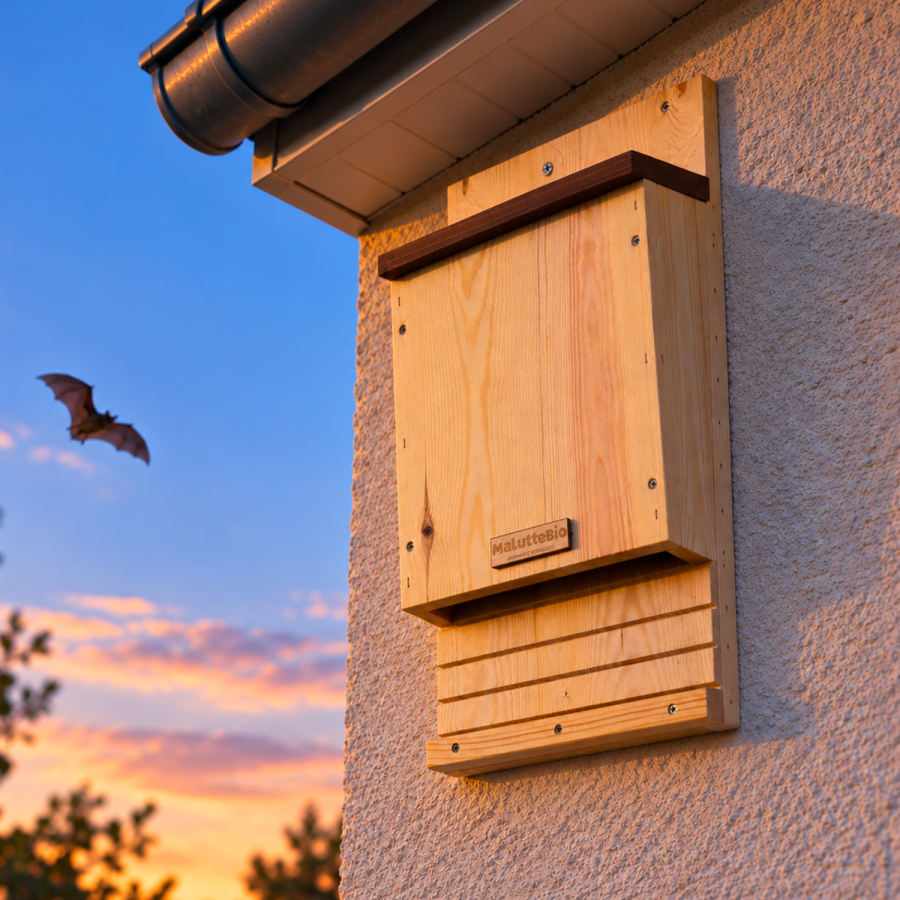
Posez-le sur un mur, une façade, un arbre ou un poteau, sans branche ni obstacle devant l'entrée. Évitez les endroits éclairés la nuit et ceux où les chats peuvent grimper facilement.

Fixez-le entre 2,5 et 5 mètres de hauteur. À cette hauteur, les chauves-souris peuvent entrer et sortir en plein vol, et le nichoir reste hors de portée des prédateurs.

Orientez-le au sud ou au sud-est. Les chauves-souris ont besoin de chaleur, surtout les femelles qui élèvent leurs petits. Si vous posez un second nichoir orienté au nord, elles auront un abri plus frais pendant les fortes chaleurs et choisiront le plus adapté selon la saison.

Le nichoir a deux trous de fixation. Sur un arbre, utilisez de préférence des vis en inox ou en aluminium, ou un fil de fixation souple glissé dans les trous, pour abîmer le tronc le moins possible. Pensez à desserrer la fixation de temps en temps pour qu'elle ne serre pas l'arbre en grandissant.

Le nichoir mesure 21,5 × 12 × 39 cm. Il peut abriter quelques pipistrelles ou une petite colonie. En France, c'est surtout la pipistrelle commune qui s'y installe, et parfois la pipistrelle de Nathusius, la jeune sérotine commune ou la noctule.

Ne l'ouvrez surtout pas. Cherchez plutôt des petites crottes sèches et friables au pied du nichoir : c'est le guano, qui tombe par l'entrée située dessous. Vous pouvez aussi guetter les sorties au coucher du soleil, par une soirée douce. Soyez patient : les chauves-souris peuvent mettre plusieurs mois, parfois plus d'un an, à s'installer.

Oui, en partie. Une pipistrelle peut manger jusqu'à 3 000 petits insectes par nuit : des moustiques, des moucherons et des papillons de nuit comme les noctuelles, dont les chenilles sont le ver gris. Le nichoir aide à réguler les insectes de nuit sans produit chimique, mais il ne suffit pas à lui seul à se débarrasser des moustiques.

Non. En France, toutes les espèces de chauves-souris sont protégées, et il est interdit de les capturer, de les déplacer ou de les déranger dans leur gîte. Le nichoir sert à leur proposer un abri, qu'elles viendront occuper d'elles-mêmes.

Non, il ne demande aucun entretien. Le guano tombe tout seul par l'entrée du bas, et vous ne devez jamais ouvrir le nichoir. Pour que le bois dure plus longtemps, passez une fois par an de l'huile de lin sur les parois extérieures, en dehors de la période où il est occupé.

Il faut un bois massif, assez épais pour isoler, et non traité à l'intérieur. Ce nichoir est en pin massif de 15 mm, fabriqué en Europe. Seul son toit est traité, avec une lasure écologique à base d'eau.

Loading...